
19 Nov 2026 - 9:44 PM
Skip Hire for Home Extensions: Planning Your Waste From Day One

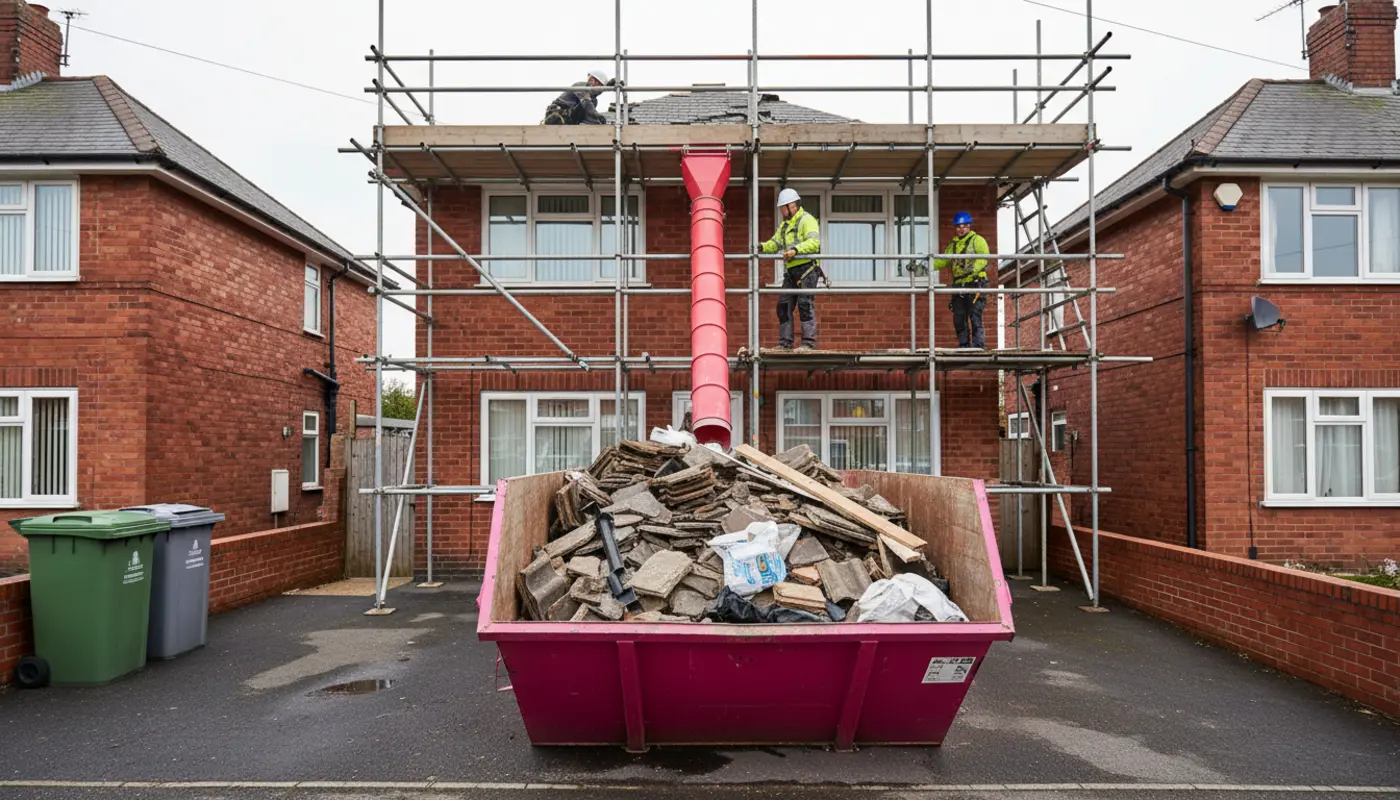
A roof replacement creates heavy, bulky waste, so the best skip is the one that suits both the amount of waste and the weight of the load. Old tiles, slates, timber battens, felt, membrane, mortar, flashing, guttering, downpipes and packaging can all build up quickly. Planning your skip before the roofers arrive helps keep the job safer, tidier and less stressful.
The right skip depends on the size of your roof, the type of roof covering being removed, how much material can be reused, where the skip can be placed and how heavy the load is likely to be. For most homeowners, the biggest surprise is not always how much space roof waste takes up. It is the weight. Concrete tiles, clay tiles, slate and mortar can make a skip reach its safe lifting limit before it looks full.
Pink Skip Manchester helps homeowners and roofers across Greater Manchester plan practical skip hire for roofing work, with a range of skip sizes, punctual delivery and waste handled through its own recycling facility where suitable materials can be sorted responsibly.
A roof replacement usually creates several types of waste, not just old tiles. Concrete roof tiles, clay tiles and natural slates often make up the main load, but a full strip can also include broken ridge tiles, mortar, fixings, nails and damaged roof parts.
If sound slates or tiles are worth keeping, ask your roofer to separate them before the main strip begins. Once everything is mixed in a skip, it becomes much harder to recover usable pieces.
Timber roof battens are another common waste material, especially when a roofer finds rot, water damage or old fixings that make reuse impossible. There may also be short timber offcuts, fascia boards, roof deck sections or small pieces of damaged structural timber. These materials are lighter than tiles, but they can be awkward, sharp and full of nails, so they should be loaded carefully rather than thrown in loose piles.
Roofing felt, breathable membrane and underlay also need attention. Older felt can be brittle, dirty or damp, while modern membranes may come off in sheets or torn strips. Acceptance rules can vary depending on the material and its condition, so it is sensible to describe it when arranging your skip rather than assuming it can always be mixed with heavy rubble.
Guttering, downpipes, flashing and metalwork can add more variety to the load. Plastic guttering is bulky but light, while lead flashing, metal brackets and aluminium trims may be better kept separate where practical. You may also have insulation, roof vents, old clips, packaging from new materials and general site debris, so give your skip provider a clear picture of the whole job, not just the roof covering.
Roofing waste can be very heavy because tiles, slates, mortar and rubble are dense materials. A skip filled with light garden waste is very different from a skip filled with concrete tiles, even if both look similar in size. Skip size is not only about how much space the container offers. It is also about whether the lorry can safely lift and transport the loaded skip.
It is easy to underestimate how heavy roof tiles can be. A skip may look only half full and still be too heavy if it contains mostly tile, slate and mortar. Wet materials can add even more weight, especially if the roof has been exposed to rain during the strip.
Roof pitch, the number of roof layers, the amount of bedding mortar and whether old battens or felt are mixed in can all affect the final load. Ordinary tiles and ceramics are generally treated as construction and demolition waste, but materials must be classified correctly before disposal or recovery.
GOV.UK gives neutral guidance on construction and demolition waste classification, which is useful when planning mixed renovation waste. For homeowners, the practical point is simple. Tell your skip provider what is coming off the roof so they can advise on the safest option.
The best skip for roof replacement waste is the one that matches both volume and weight, not simply the biggest skip you can fit outside the house. If you are not sure, it is always better to ask before booking than to find out halfway through the job that the skip is too small or too heavy.
For small roof repairs, porch roofs and some garage roofs, a smaller skip may be enough if the load is limited and the materials are accepted. These jobs can still be heavier than expected, especially if old tiles, mortar or felt are removed together.
For a typical house roof replacement, many homeowners start by thinking about a builders skip. That can be a useful starting point, but there is no fixed answer that suits every property. A small terraced roof, a semi detached home with concrete tiles and a larger detached property with several roof sections can all create very different loads.
Large homes, complex roof shapes, extensions, outbuildings and properties with slate roofs may need a more planned approach. A single large skip is not always better if the waste is very dense, because heavy material can hit the weight limit before the container is full. In some cases, staged collections or an exchange during the job can keep the roofers working without leaving an overloaded skip outside your home.
If you are unsure where to begin, a skip size guide can help you understand common uses and limits before you speak to a provider. For a wider overview, see how to choose the right skip size for your project, then use your roof details to narrow the choice.
You do not need to measure every tile, but a few details will make your quote far more accurate. Tell the skip provider whether the roof is concrete tile, clay tile, slate, flat felt, sheet material or a mixture. Mention the approximate size of the property, whether the garage or extension is included and whether the roof has more than one layer.
It also helps to ask your roofer what they expect to remove. Roofers can often spot old bedding mortar, rotten battens, previous patch repairs and extra underlay before the strip begins. They may not know everything until the tiles are off, but their experience can help you avoid booking too small.
Ask yourself a few quick questions before arranging delivery. Will the skip fit near the scaffold? Can the driveway take a heavy loaded skip? Has your roofer included waste removal in the quote, or are you organising the skip yourself?
Use this quick checklist before arranging delivery.
These details reduce guesswork and help the provider advise whether one skip is likely to be enough, or whether an exchange should be planned. If your project changes once the roof is opened up, let the provider know quickly rather than waiting until the skip is full.
Old roof tiles, felt and timber can often go in the same skip when they are accepted as mixed construction waste, but you should always check before loading. The rules can depend on the materials, the local waste facility and the total weight of the skip.
Concrete and clay roof tiles are often suitable for construction waste skips, subject to weight limits. Natural slate may also be accepted, though sound slates can sometimes be reused or sold, so separating them early can save waste and may recover some value.
Timber battens are often accepted as part of a mixed building waste load, but long pieces should be cut down or loaded safely where possible. Protruding nails and sharp fixings can be a hazard, especially if the skip is near a footpath or driveway. Felt and membrane should be declared when booking, as some facilities prefer certain materials to be separated, contained or handled differently.
Plastic guttering and downpipes are light but bulky, so they can quickly take up space if placed in the skip before the heavier materials. Metal guttering, aluminium trim and lead flashing may be better separated for recycling or reuse. Mortar and rubble should be treated as heavy waste and loaded with care, as they add weight very quickly.
If you are planning a mixed roofing load, it is worth checking general skip rules first. The article on what can you put in a skip explains common accepted and restricted items, which is useful when your roof waste includes more than just tiles.
Some roof materials should not go into a normal mixed waste skip because they may need specialist handling. The main concern is suspected asbestos, which can be found in older roof sheets, soffits, boards, insulation products or roof related parts. If you suspect asbestos, do not break it, cut it, drill it, throw it into a skip or mix it with ordinary roof waste. Stop work and get competent advice, because asbestos needs specialist handling, packaging, transport and disposal.
Lead flashing and other metals also deserve a little extra thought. Lead can have recycling value and is often removed separately by roofers, so ask how it will be handled before the job starts. Clean metal should not be buried under rubble if it can be separated safely.
Insulation and plasterboard can also need separate treatment, depending on the material and the facility receiving the waste. Do not assume that anything found in the roof space can go in the same skip as tiles. A quick check before loading is far easier than dealing with a rejected or contaminated skip later.
The safest skip position during a roof replacement is usually close to the work area, but only if it leaves enough room for scaffolding, ladders, the delivery lorry and safe access around the property. A private driveway is often the easiest option because it avoids highway permits and keeps the skip close to the house.
Before you choose the spot, check the surface carefully. Can it cope with a heavy loaded container? Will the lorry have enough room to deliver and collect it? Are there parked cars, low branches, walls or overhead cables that could make access difficult?
If the skip needs to go on a public road in Manchester, a permit is normally required, and the skip operator usually applies for it. Private land, such as a driveway or garden, does not usually need a road permit. Manchester permits have time limits, so the delivery and collection dates should match the roofer's schedule as closely as possible.
Think about the scaffold and rubble chute before choosing the final spot. Roofing waste should be lowered in a controlled way, using safe methods such as a chute or suitable container system, rather than thrown from height. The skip should be placed where the chute can discharge safely into it, without blocking entrances, pavements, emergency access or the scaffold base.
The best time to arrange skip delivery is once your roofer has confirmed the strip date and the scaffolding plan. You want the skip on site before the first waste comes off the roof, but not so early that it blocks parking or access for days before anyone needs it. This matters even more if the skip is on the road and the permit period is limited.
Ask your roofer whether waste disposal is included in their quote or whether you are arranging it yourself. It is also worth confirming who will load the skip, who will check for restricted materials and who will contact the skip company if the job finishes early or needs an exchange.
If you are booking the skip, share the delivery date, roof type, waste materials, access notes and expected completion date with the skip provider. If the roofer plans to use a chute, make sure the skip position is agreed by the roofer, scaffolder and skip company before delivery.
Build in a little extra time because roofs can hide surprises. Rotten battens, extra felt layers, unexpected decking, old repairs and damp insulation can all increase the amount of waste. Bad weather can also delay the strip, so ask how collection or exchange dates can be adjusted if the job moves.
Roofing waste should be loaded evenly and kept below the rim of the skip. Heavy tiles and slates should not be piled at one end, as this can make the load uneven and harder to lift safely. Sharp timber, nails and broken slate should be contained within the skip, not sticking out where someone could be hurt.
Do not overfill the skip, even if the roofer is keen to keep the job moving. An overfilled skip may not be collected, and loose materials can fall during transport. If the skip reaches its safe fill level or weight limit before the roof is finished, stop loading and arrange an exchange.
Keep suspected hazardous materials out of the skip unless the provider has confirmed the correct handling route. It is also sensible to keep lightweight packaging away from chute discharge areas, as it can cause blockages or blow around the site. A tidy loading approach helps the job run faster and keeps your home safer while the work is happening.
To avoid ordering the wrong skip for a roof replacement, plan for weight as well as space. Roof tiles and slates are heavy, so a bigger container does not always mean you can put in more material. Always ask about the weight allowance, accepted materials and excluded items before confirming the booking.
Another common mistake is forgetting the less obvious waste. Felt, battens, guttering, insulation, mortar, packaging and damaged fittings all add up. If you only plan for the visible tiles, you may need a second skip sooner than expected.
Finally, do not leave logistics until the morning the roofers arrive. Check driveway access, road permits, parking restrictions, overhead cables, narrow streets and space for the lorry. With local support from Pink Skip Manchester, it is easier to avoid delays, overfilled skips and last minute permit problems, so your roof replacement can keep moving with less hassle.
Before booking a skip for roof replacement waste, check what your roof is made from, estimate how much heavy material will come off and confirm where the skip can safely sit. Speak to your roofer about loading, restricted materials, timing and whether an exchange might be needed. A little planning now can save a lot of stress once the tiles start coming off.
Can Roof Tiles Go In A Skip?
Yes, ordinary roof tiles can often go in a suitable construction waste skip, but you should confirm weight limits and accepted materials before booking.
What Is The Best Skip Size For A Roof Replacement?
It depends on the roof area, covering type, number of layers, salvageable materials and weight allowance. Small repairs may only need a smaller skip, while full house roofs often need a larger option or planned exchanges. A provider should assess the job details rather than give one fixed answer for every home.
Why Does A Skip Look Empty When It Is Already Too Heavy?
Tiles, slate and mortar are dense, so they can reach a safe lifting limit before the skip is full by volume. This is why roof waste needs planning by weight as well as space.
Can Roofing Felt Go In The Same Skip As Tiles?
Sometimes, but acceptance rules can vary depending on the felt and local processing arrangements. Tell your skip provider about felt before the skip is delivered.
Can Asbestos Roof Sheets Go In A Normal Skip?
No, suspected asbestos must not be mixed with ordinary roof waste. Stop work and arrange specialist advice, handling and disposal.