

9 Nov 2026 - 11:33 PM
4 Yard Skip Hire: What Fits and Which Jobs It Suits

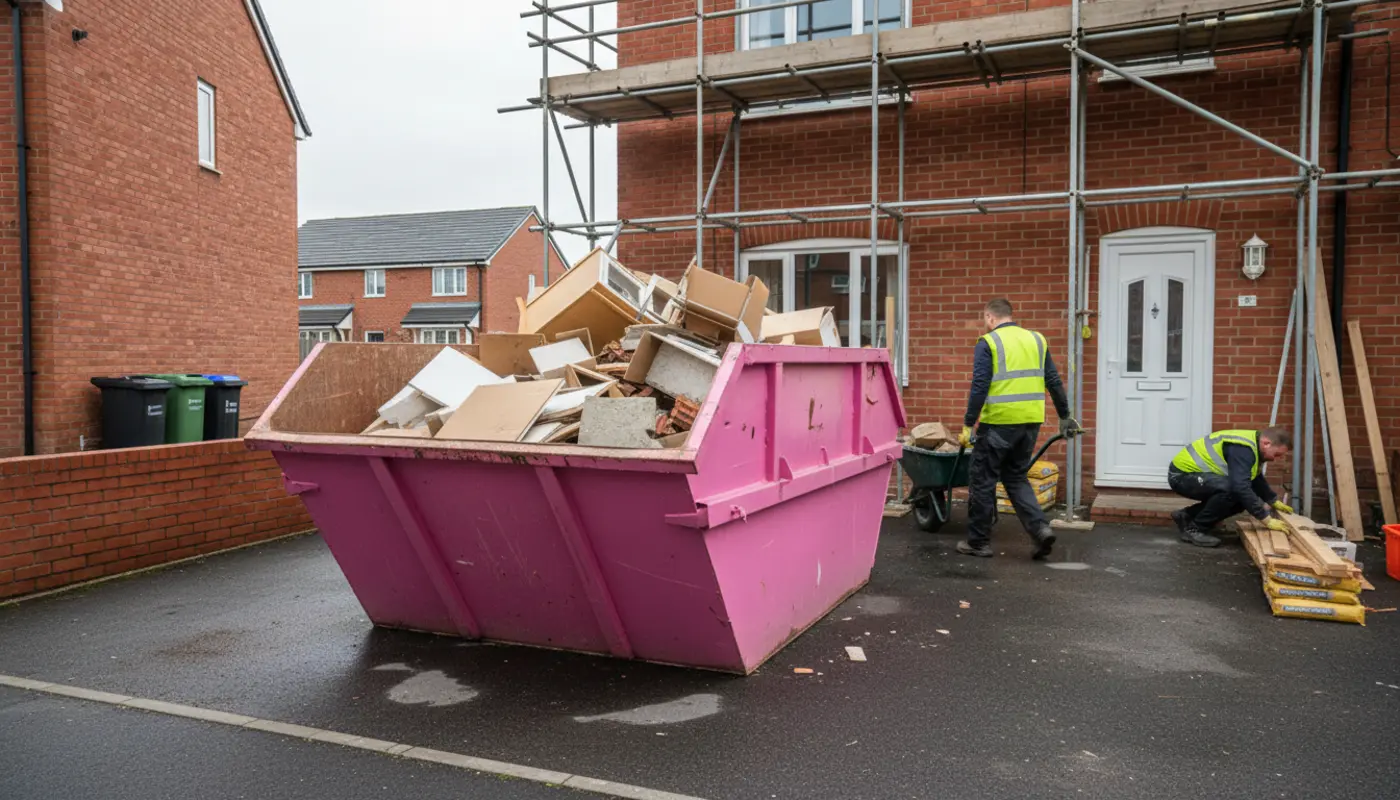
An 8 yard builders skip is a strong open skip used for building waste, renovation rubbish and bulky household materials. It holds 8 cubic yards of waste, which is about 6.1 cubic metres. For most projects, that is roughly 70 to 80 standard bin bags, although the real amount depends on the waste type and how neatly the skip is loaded.
It is a practical choice for kitchen refits, room renovations, small extensions, garage clearances and general construction waste. It gives you a good amount of space without moving into the very large skip sizes. It is big enough for bulky renovation waste, but still compact enough for many driveways and building sites.
Home projects and trade jobs can get messy quickly, and waste often builds up faster than expected. With local experience, a wide range of skip sizes and its own recycling facility, Pink Skip Manchester helps homeowners and trades across Greater Manchester choose the right skip, arrange delivery smoothly and keep waste disposal simple from start to finish.
An 8 yard builders skip is named after its volume, not its exact outside measurements. It can hold 8 cubic yards of waste, which makes it a popular size for builders, decorators, joiners, landlords and DIY renovators.
A typical 8 yard skip is around 3.4 to 3.7 metres long, 1.7 to 1.8 metres wide and about 1.2 metres high. In imperial measurements, that is roughly 11 to 12 feet long, around 5.5 to 6 feet wide and close to 4 feet high. Sizes can vary slightly between skip operators, so it is always worth checking the exact measurements if access is tight.
The capacity is about 6.1 cubic metres. That makes it larger than a 6 yard skip and smaller than a 12 yard skip, which is why it is often seen as a sensible middle choice for domestic work and trade jobs.
An 8 yard builders skip usually holds around 70 to 80 standard bin bags of waste. Treat this as a guide rather than a promise, because bulky items and heavy materials can change how much space is actually usable.
A skip filled with broken kitchen cabinets, flattened packaging and timber offcuts will use space very differently from one filled with loose furniture, bathroom fittings or rubble. Dense waste can also reach a safe weight limit before the skip looks full.
Soil, concrete, bricks, hardcore and rubble are much heavier than general household waste. If your project includes a lot of heavy material, ask about the rules before delivery. That way, collection stays safe and there are no unwanted surprises.
An 8 yard builders skip is well suited to medium and larger home improvement projects where waste builds up quickly. Kitchen refits are a good example, as old units, worktops, tiles, flooring, packaging and general renovation rubbish can soon fill smaller skips. If you are planning a kitchen project, this helpful article on the best skip size for a kitchen renovation explains what to consider.
It is also a common choice for full room renovations, such as removing old wardrobes, carpets, laminate flooring, plasterboard, skirting boards, shelving and fixtures. For landlords and property managers, it can be useful during end of tenancy clearances where bulky items and refurbishment waste need removing together.
For extensions and structural work, an 8 yard skip can handle a wide range of construction and demolition waste, including timber offcuts, packaging, blocks, bricks and general debris. The key point is to watch the weight of heavy materials. Rubble or soil can become the limiting factor long before the skip's volume is used.
A standard 8 yard skip is loaded over the sides. This works well for bagged waste, timber, fixtures, fittings and general renovation rubbish. It is simple, reliable and suitable for many building and home clearance jobs where the waste can be lifted safely.
An 8 yard drop door skip has a hinged door at one end, which opens to give ground level access. This can make loading much easier if you are using a wheelbarrow or moving heavier items by hand. Instead of lifting everything over the side, you can wheel or carry waste straight in.
The drop door does not increase the skip's capacity. It still holds 8 cubic yards, but it changes how you load it. You will also need clear space in front of the skip so the door can open safely. The door should be closed when loading is not taking place.
Choose a drop door skip when waste is being moved by wheelbarrow, when heavier materials are involved, or when you want easier access from a driveway or open work area. It can make a real difference on projects with rubble, soil, bricks, broken tiles or bathroom waste because you can load from a lower level and reduce awkward lifting.
A standard skip is still fine for many jobs, especially if you are mainly loading bags, wood, packaging and lighter renovation waste. The best choice depends on your site layout, the type of waste and how your team plans to load it. If you are not sure, the team at Pink Skip Manchester can talk through access, waste type and loading method before you book.
An 8 yard builders skip can usually take timber, tiles, old kitchen units, bathroom fittings, packaging, furniture, carpets, flooring and general non hazardous renovation waste. Plasterboard may need to be separated or arranged in a specific way, so check first rather than assuming it can be mixed with everything else.
Heavy materials such as soil, concrete, bricks, blocks, rubble and hardcore are often possible, but they may be subject to weight limits or different pricing. If you are unsure how heavy your waste will be, it is worth reading more about skip weight limits before you book, as it can help you avoid collection problems.
Some materials should not go in a general builders skip. These usually include asbestos, chemicals, liquid paint, fuels, oils, gas cylinders, clinical waste, tyres, batteries, fridges, freezers and some electrical items. Rules can vary by waste type and disposal route, so always ask if you are dealing with anything unusual, old, contaminated or possibly harmful.
Loading an 8 yard skip well can save space, reduce mess and make collection safer. Start with flatter materials and larger items that create a steady base. Then add smaller pieces into gaps as the skip fills. Breaking down bulky furniture, cabinets and timber can make a big difference because air pockets waste useful space.
Keep heavy materials low and spread them evenly across the base, rather than piling them all on one side. This helps keep the skip stable and makes lifting safer for the collection vehicle. Never fill above the sides because overflowing waste can fall during transport and may be refused for collection.
An 8 yard skip needs enough space for its footprint, plus room for safe delivery, collection and loading. For the skip itself, allow for roughly 3.4 to 3.7 metres in length and 1.7 to 1.8 metres in width. If you choose a drop door version, you will also need clear room at the door end so it can open properly.
Driveways are often suitable, but make sure the surface can cope with the skip and the weight of the waste. If you have block paving, decorative surfaces or soft ground, ask whether boards or surface protection are recommended. The lorry also needs clear access, so watch out for narrow gates, low branches, parked cars, overhead cables and tight turns.
A skip permit is generally needed if the skip is placed on a public road or highway in Manchester. If the skip is placed on private land, such as a private driveway, garden or private yard, a permit is usually not required.
Manchester City Council states that the skip operator is responsible for applying for the permit, and permits are normally valid for a maximum of seven days. Pavement placement must also leave safe pedestrian access, and restricted locations may need extra approval. If there is no private space available, it is best to plan early. You can read the current local rules on the Manchester City Council skip permit information page.
A 6 yard skip is often better for smaller renovations, bathroom work, light refurbishment and modest clearances. It takes up less space and may be easier to fit on tighter driveways, but it can fill quickly during a kitchen refit or multi room project.
An 8 yard skip is the popular all round option for builders and homeowners because it gives more room for bulky waste without becoming too large for everyday domestic projects. It is a strong choice for kitchen renovations, full room refurbishments, garage clearances, joinery waste and mixed building debris.
A 12 yard skip offers more volume, but it is usually better for lighter bulky waste rather than heavy rubble or soil. Bigger is not always better because the right choice depends on both volume and weight. If you are unsure, describe your project clearly when asking for a quote, including the main materials and where the skip will be placed.
The most common mistake is booking based only on bag capacity. The figure of 70 to 80 bags is useful, but it does not tell the full story. Bulky items, awkward shapes and heavy waste all affect how much you can load.
Another easy mistake is forgetting to measure the delivery area. An 8 yard skip may fit the space, but the lorry still needs safe access to drop it off and collect it. If you need a drop door, remember to leave clear space at the door end, not just enough room for the skip footprint.
Overfilling is another problem. Waste should stay level with the skip sides, with no loose boards, bags or fixtures sticking out above the top. Mixing restricted waste with general rubbish can also cause delays, extra charges or refusal, especially where asbestos, paint, electrical items or gas cylinders are involved.
An 8 yard builders skip is one of the most useful sizes for homeowners and trades because it handles bulky renovation waste, general building debris and larger clearances without taking up the space of a much larger skip. It suits kitchen refits, extensions, room renovations and many trade jobs, as long as the waste type, weight and placement are planned properly.
Before you book, think about what you are throwing away, how heavy it is, where the skip will go and whether a drop door would make loading easier. Pink Skip Manchester brings local knowledge, punctual delivery, a friendly booking process and responsible waste handling through its own recycling facility. If you are planning work in Greater Manchester, share your project details, waste type and skip location, and the team can help you choose the right 8 yard skip for a tidy, hassle free job.
How Many Bags Fit In An 8 Yard Skip?
An 8 yard skip usually holds around 70 to 80 standard bin bags. The exact amount depends on bag size, waste type and how neatly everything is loaded.
Is An 8 Yard Skip Suitable For A Kitchen Renovation?
Yes, it is often a good size for kitchen units, flooring, tiles, worktops and packaging. Always check if appliances or heavy materials need separate arrangements.
What Is The Difference Between A Standard Skip And A Drop Door Skip?
A standard skip is loaded over the sides, while a drop door skip has a hinged end door for easier ground level loading. The capacity stays the same, but access is much easier.
Can I Put Soil Or Rubble In An 8 Yard Skip?
Often yes, but soil, concrete and rubble are very heavy and may be limited. Confirm the rules before booking so the skip can be collected safely.
Can I Fill An 8 Yard Skip Above The Sides?
No, waste should stay level with the skip sides. Overfilled skips can be unsafe to move and may not be collected until the load is reduced.