

21 Oct 2026 - 3:27 PM
What Is a Builders Skip? Sizes and Best Uses

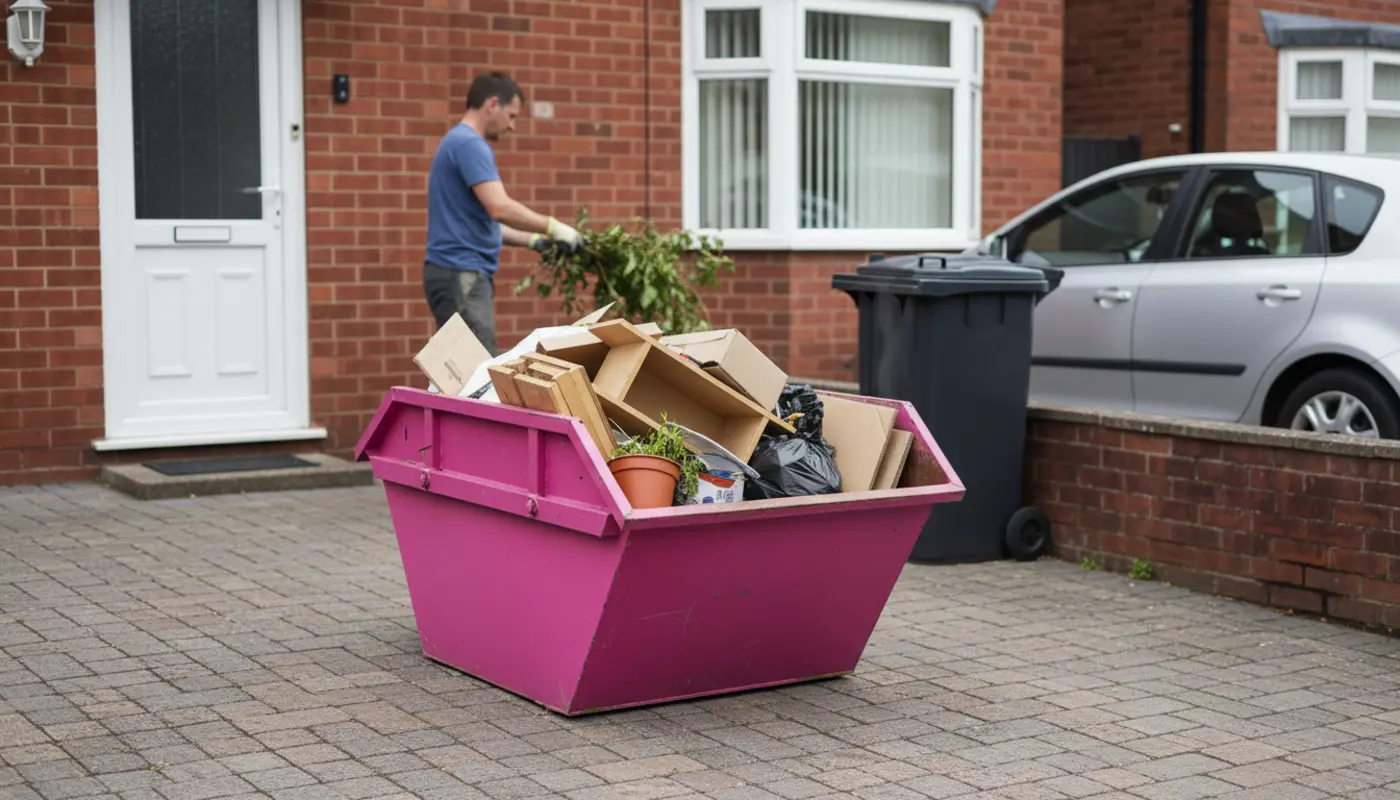
A mini skip is a small skip used for light household clearances, garden tidy ups and small DIY jobs. It is usually known as a 2 cubic yard skip, which means it holds about 2 cubic yards of waste by volume, although the exact size can vary between skip hire companies.
If you are clearing a shed, sorting a loft, pruning a small garden or getting rid of waste from a minor home project, a mini skip can be a neat and good value choice. It helps you avoid repeated trips to the recycling centre and keeps your waste in one safe place while you get the job done.
At Pink Skip Manchester, many customers ask whether a mini skip will be big enough for their job. That is a very normal question. With local experience, a range of skip sizes and our own recycling facility, we can help you choose a skip that suits the job without paying for space you do not need.
A mini skip is the smallest standard skip size offered by many skip hire firms. It is made for small amounts of household waste, light renovation waste and garden rubbish rather than large building projects. In most cases, when people ask for a mini skip, they mean a 2 cubic yard skip.
The word yard can be confusing because it does not mean the length of the skip. It refers to cubic yard capacity, which is a way of measuring volume. In simple terms, it means how much empty space is inside the skip for waste.
Mini skip sizes are not always exactly the same across every company. The HSE waste collection guidance explains that there are no national manufacturing standards for skips and containers, so sizes can vary between operators. If space is tight, always ask for the exact outside measurements before booking.
A mini skip is usually around 2 cubic yards in capacity. As a rough guide, it may hold about 20 to 30 standard household bin bag equivalents. The exact amount depends on the size of the bags, how full they are and how well the waste is packed.
Many mini skips are roughly 0.8 to 0.9 metres high, 1.2 to 1.3 metres wide and 1.5 to 1.8 metres long. These measurements are only a guide. Some skips are slightly shorter, wider or deeper, so it is best to check the exact footprint if the skip needs to fit on a small driveway or in a narrow access area.
Weight matters as much as space. A mini skip may still look like it has room inside, but heavy materials such as soil, bricks, concrete and tiles can reach the weight limit quickly. For this reason, a mini skip is often better for light mixed waste than for a large amount of dense rubble.
A mini skip can hold a useful amount of waste when the job is small and the items are easy to manage. It is a good middle ground between filling the car for several recycling centre trips and hiring a larger skip that you may not need.
Common items include bags of old household clutter, broken shelving, small pieces of timber, cardboard, packaging, garden cuttings, plant pots, hedge trimmings and limited DIY waste. A mini skip can also suit a small room tidy, cupboard clear out, garage sort out or waste from light decorating work.
Bulky items can fill a mini skip faster than expected. A broken chair, a dismantled unit or several bags of loose garden waste may use more space than neatly stacked materials. If you can safely break down cardboard, timber and flat pack furniture before loading, you will usually get better value from the space.
A mini skip is best for small home projects where the waste is limited, easy to lift and not too heavy. It works well for weekend clear outs, compact garden jobs and small DIY tasks where the amount of waste is fairly easy to judge.
For garden clearances, a mini skip is useful for pruning waste, dead plants, small branches, old compost bags, plant trays and light outdoor clutter. It can also help when clearing a shed, especially if you have broken tools, empty containers, wood offcuts and general rubbish. Soil and turf need more care because they are heavy and can quickly make a small skip unsuitable.
For indoor jobs, mini skips are handy for decluttering spare rooms, clearing loft items, removing old shelves or dealing with waste after decorating. If you are doing a small bathroom or kitchen task, such as removing a few tiles or packaging from new fittings, a mini skip may work. A full bathroom strip out or kitchen renovation will usually need something larger, and you can compare options in our advice on the best skip size for a bathroom renovation.
Hazardous or restricted waste cannot go in a mini skip. The smaller size does not change the rules, and some materials need special handling for safety and legal reasons.
Items that are commonly not accepted include asbestos, gas bottles, pressurised containers, paint, solvents, fuels, oils, chemicals, clinical waste, explosives, batteries and some electrical appliances. Fridges, freezers, mattresses and upholstered furniture may also need special arrangements, depending on the operator and disposal rules.
If you are unsure about an item, ask before putting it in the skip. This helps avoid delays, extra charges and unsafe handling. For a broader look at accepted and restricted waste, our page on what you can put in a skip is a useful starting point.
A mini skip is usually around 2 cubic yards, while a midi skip is commonly around 4 cubic yards. A midi skip gives roughly double the volume, which can make a big difference if your project creates more waste than expected.
A mini skip is best when space is limited, the job is small and the waste amount is easy to estimate. It is often easier to place on a driveway and can be a good choice for quick household clearances. A midi skip is better when you have bulkier items, several rooms to clear or a project that may produce waste in stages.
Choosing the smallest skip is not always the cheapest choice if it leads to needing a second skip. If your waste looks close to the upper limit of a mini skip, it may be more practical to move up a size. A quick chat about the project, waste type and placement area can save time and money.
A mini skip will fit on many standard driveways, but you should measure the space before booking. The outside footprint is what matters for delivery and placement, not just the internal capacity.
Check the available width and length, then look for gates, low walls, parked cars, overhanging branches, cables, balconies and tight turns. If the driveway has block paving or a delicate surface, ask whether boards are recommended to help spread the load. The skip should sit level and should not block doors, drains or shared access.
If you live on a terraced street or do not have a driveway, road placement may be possible, but it needs planning. Parking pressure, road width, junctions, bus stops and pedestrian routes can affect whether a skip can be placed safely and legally.
You normally do not need a highway skip permit if the mini skip is placed on private land, such as your driveway or garden. If the skip needs to go on a public road in Manchester, a permit is normally required, even for a small skip.
Manchester City Council states that the skip operator is responsible for applying for a road permit. The permit is usually valid for a limited time and must meet council conditions. Rules can also vary across Greater Manchester boroughs, so Manchester, Bury, Salford, Stockport, Trafford and other nearby areas may not all follow the same process.
A good local skip hire company will talk you through this before delivery. They should confirm whether a permit is needed, where the skip can safely sit and whether any access issues could affect the booking.
Loading a mini skip properly helps you use the space safely and avoid collection problems. Start with flatter and heavier items at the bottom, then place lighter waste on top.
Try to spread the weight evenly rather than piling everything at one end. Break down bulky items where it is safe to do so. Flatten cardboard, dismantle small furniture and cut manageable branches into shorter lengths. This reduces gaps and helps stop the skip filling too quickly.
Never load above the rim of the skip. Overfilled skips are unsafe to transport, and drivers may not be able to collect them until extra waste is removed. Keep hazardous items out, avoid loose dust where possible and make sure the area around the skip stays clear for collection.
A mini skip is easier to book when you know what waste you have, where the skip will sit and whether any restrictions apply. A few minutes of planning can prevent common problems, such as ordering too small, placing the skip in the wrong spot or loading restricted items by mistake.
A mini skip is too small for larger clearances, full renovations and heavy waste loads. If you are clearing several rooms, removing a full kitchen, stripping out a bathroom, replacing a roof or doing major landscaping, you will probably need a larger skip.
Heavy waste can also change the decision. Bricks, soil, hardcore and concrete can make a mini skip reach its weight limit before it looks full. In that case, the issue is not only how much fits inside, but whether the load can be lifted and transported safely.
If you are unsure, describe the job clearly when asking for advice. Tell the operator what materials you have, roughly how much there is and where the skip needs to go. A reliable recommendation should consider volume, weight, access and local permit rules, not just the name of the skip size.
A mini skip is a simple and tidy option for small home projects, but it works best when the size matches the waste. It is ideal for compact clearances, light DIY jobs and small garden tidy ups, yet it can be too limited for full renovations or heavy material loads.
Pink Skip Manchester helps customers across Greater Manchester choose the right skip size based on the project, waste type and placement location. With punctual deliveries, friendly local service and recycling handled through our own facility, the aim is to make skip hire straightforward from booking to collection.
If you are planning a small job, share your postcode, waste type, rough quantity and whether the skip will go on a driveway or road. We can help you work out whether a mini skip is the right fit or whether a slightly larger size would save you hassle.
Is A Mini Skip The Same As A 2 Cubic Yard Skip?
Usually, yes. A mini skip commonly means a 2 cubic yard skip, although exact dimensions can vary between companies.
How Many Bin Bags Fit In A Mini Skip?
A mini skip usually holds about 20 to 30 standard household bin bag equivalents. The exact amount depends on bag size, waste type and how well the waste is packed.
Can I Put Garden Waste In A Mini Skip?
Yes, small amounts of non hazardous garden waste are usually suitable. Be careful with soil, turf and large branches, as they can fill the skip or add weight quickly.
Can I Put Rubble Or Soil In A Mini Skip?
Small amounts may be accepted, but rubble and soil are heavy. Always confirm the weight limit before booking or loading dense materials.
Do I Need A Permit For A Mini Skip On A Manchester Road?
Yes, a skip on a public road normally needs a permit, whatever its size. In Manchester, the skip operator is usually responsible for arranging it.