

20 Oct 2026 - 8:54 PM
What Happens to Skip Waste? Manchester Recycling Explained

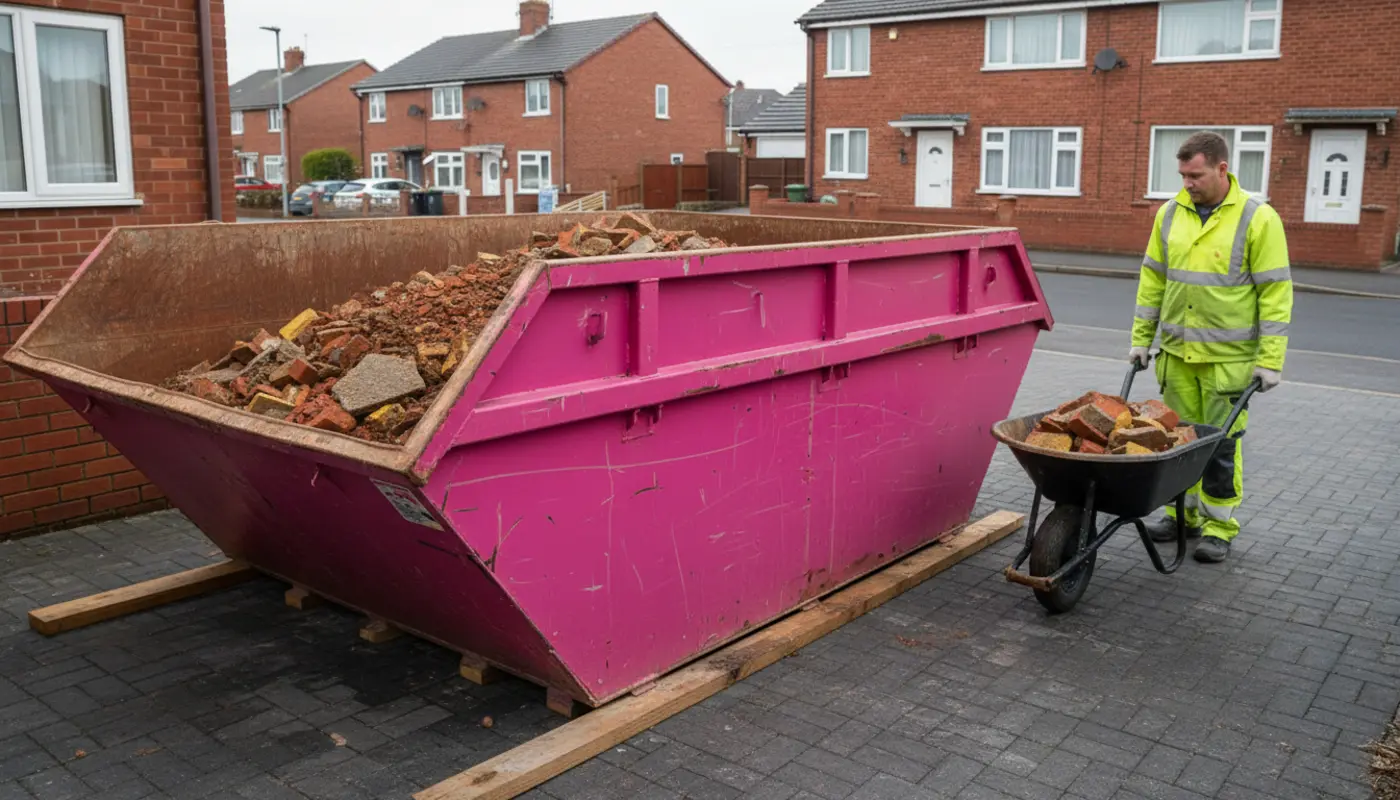
Skip weight limits matter because a skip can only hold heavy waste up to its safe lifting allowance, even if there is still space inside. Soil, rubble, bricks and concrete are dense materials, so they can reach the weight limit before the skip looks full.
Skip size is usually shown in cubic yards, which tells you the volume of waste it can hold. Weight is different because two skips of the same size can weigh very different amounts depending on what goes in them.
Pink Skip Manchester helps customers across Greater Manchester choose suitable skips for heavy waste, mixed waste and renovation clearances. The team gives practical advice based on local collections, recycling facility experience and safe loading rules.
For heavy waste such as soil, rubble and concrete, smaller skips are often the safest and most practical choice. Larger skips are usually better for bulky lighter waste, such as furniture, packaging, timber and general household rubbish.
If your waste is dense, a bigger skip does not always mean you can put more in it. The skip may reach its safe weight allowance before it reaches the fill line. If you are unsure, describe the waste clearly before booking rather than guessing on the day.
Skip weight limits matter because the skip, the waste inside it and the collection vehicle all need to be moved safely. The vehicle has lifting equipment, axle limits and road rules to follow. A skip cannot simply be filled with any material up to the rim. A skip full of cardboard is very different from a skip half full of wet clay, even if the clay takes up less room.
Most people choose a skip by looking at its volume, such as a mini skip, midi skip or builders skip. That works well for light household waste, garden cuttings, packaging, old furniture and general bulky rubbish. It becomes less reliable when the waste is mainly heavy inert waste, such as soil, hardcore, broken paving slabs, brick rubble or concrete.
The key point is simple. Volume tells you how much space you have, while weight tells you whether the loaded skip can be lifted and carried safely. A large skip might give you more room, but it does not always mean you can load more tonnes of dense waste. For heavy materials, the safest and most cost effective option is often a smaller skip or a carefully planned series of collections.
Skip weight limits for soil, rubble and concrete depend on the skip type, vehicle, operator and how the waste is loaded. There is no single UK wide limit that applies to every skip, so it is always best to ask for the confirmed allowance before booking. That one quick question can save a lot of trouble later, especially if you are digging out a garden, removing a patio or breaking up a driveway.
Heavy waste is tricky because it has a high bulk density. Bulk density simply means how heavy a loose material is in a set amount of space. Loose rubble is not the same as one solid block of brick because there are gaps between the pieces. Even so, it is still much heavier than mixed household rubbish.
As a broad estimating range, dry loose topsoil may be around 1.2 to 1.5 tonnes per cubic metre. Damp soil or clay can be closer to 1.6 to 2.0 tonnes per cubic metre. Brick rubble is often around 1.4 to 1.8 tonnes per cubic metre, and broken concrete can be roughly 1.8 to 2.4 tonnes per cubic metre. These figures are practical estimates, not guaranteed skip allowances, because moisture, compaction and material type can make a big difference.
This is why a skip can look only partly full but already be too heavy. Three cubic metres of wet soil could weigh around 4.8 to 6.0 tonnes. The same space filled with light renovation waste, such as timber, packaging and old cupboards, may weigh far less. If your project involves soil, stones, concrete or demolition waste, it is worth reading more about putting soil in a skip safely before you start loading.
A larger skip is not always right for heavy loads because extra space can lead to unsafe weight. A large skip gives you more volume, which is useful for bulky light items, but it can encourage overloading when the contents are dense. Filling a large skip with soil or concrete can create a load that is far beyond what the vehicle can safely lift.
For dense waste, smaller skips are often easier to manage because they naturally limit the amount you can load in one go. A small skip full of rubble may still be very heavy, but it is usually easier to keep within safe working limits than a large skip packed with the same material. This is why skip providers may recommend a smaller container for hardcore, soil or concrete, even if you feel there is enough waste to fill a bigger one.
For bigger construction and landscaping jobs, the better answer may be several controlled loads rather than one huge load. It can feel slightly less convenient at first, but it reduces the risk of a refused collection, extra handling and unsafe lifting. If you are unsure which skip size fits the job, a practical size comparison like choosing the right skip size for your project can help you think beyond volume alone.
To estimate heavy waste weight, measure the space first and then allow extra weight for wet or compacted material. You do not need specialist tools to make a sensible estimate. Start by working out the volume of material you need to remove. Measure the length, width and average depth in metres, then multiply them together. If you are digging out a small patio base that is 3 metres long, 2 metres wide and 0.25 metres deep, the volume is 1.5 cubic metres.
Next, multiply the volume by an estimated bulk density. If that 1.5 cubic metres is damp soil at around 1.6 to 2.0 tonnes per cubic metre, it may weigh roughly 2.4 to 3.0 tonnes. If it is broken concrete at around 1.8 to 2.4 tonnes per cubic metre, it may weigh about 2.7 to 3.6 tonnes. That is a big difference for the same amount of space.
Always use the higher end of the range if the material is wet, clay based, compacted or mainly concrete. Manchester weather is not famous for keeping soil dry, so garden excavation waste can be heavier than expected. If your estimate is close to the confirmed allowance, do not gamble on it being fine. Split the load, choose a more suitable arrangement or ask the booking team before filling the skip.
The best skip size for heavy waste depends on what you are removing and how much of it there is. A mini skip or small skip can be suitable for modest amounts of soil, brick rubble, tiles or bathroom renovation debris. A builders skip can suit many home improvement jobs, but it should not automatically be filled to the top with dense material unless the provider has confirmed that it is suitable.
For garden clearances, it helps to separate heavy excavation waste from lighter green waste. Soil, turf and stones should be treated differently from branches, leaves and fence panels. For building work, keep concrete, bricks and hardcore separate where possible because a mixed load can be harder to estimate and may affect recycling options.
Large skips are often better for light bulky waste, such as furniture, packaging, timber and general clearances. They can still be useful on building sites, but dense materials need proper planning. If the skip is mainly for concrete, rubble or wet soil, tell the supplier clearly before booking rather than describing it as general waste. That gives them the chance to recommend the right skip and avoid problems at collection.
To load heavy waste safely, keep the waste level, even and below the fill line. Safe loading protects the driver, the collection vehicle, nearby property and road users. A skip that is unevenly loaded or filled above the safe line can be difficult to lift, even when it does not look risky from the pavement.
Fill levels matter just as much as weight because material above the rim can fall during transport. If you want a clearer idea of safe loading, the local advice on how high you can fill a skip in Manchester is useful before your skip arrives.
If a skip is overloaded, collection may be refused until some material is removed. This can delay your project and may leave you with the awkward job of unloading rubble that you thought you had already dealt with. Nobody wants to shovel wet clay twice, especially when rain is joining in.
Extra charges may also apply if the provider needs another visit, a replacement skip or additional handling. The exact outcome depends on the provider's terms, the type of waste and how serious the overload is. In some cases, the skip may be unsafe to lift at all, even if the contents are below the rim.
Overloading is not only a cost issue. It can put strain on lifting chains, the skip body and the vehicle. A heavy or uneven skip can also affect stability during loading and transport. That is why responsible skip hire companies take weight limits seriously rather than treating them as a small detail.
Manchester skip placement matters for heavy loads because access, permits and ground conditions can affect safe delivery and collection. If your skip is going on a public road in Manchester, a permit is normally needed. Manchester City Council explains that a permit is required for skips placed on the highway. A skip on a driveway, private land or garden does not need that highway permit. You can check the official local position on the Manchester City Council skip permit page.
A permit allows the skip to be placed in an approved location, but it does not increase the weight allowance. A skip on the road still has to be loaded safely, kept within the fill line and collected by suitable equipment. If the waste is especially heavy, access for the lorry is also important. Tight streets, parked cars and limited turning space can make collection more difficult.
If you are placing a heavy skip on a driveway, think about the surface below it. Driveways, block paving and garden areas may not always be designed for a very heavy loaded container. If in doubt, ask before booking, especially for soil, rubble and concrete loads.
Tell the booking team exactly what type of waste you have so they can recommend a suitable skip and safe weight allowance. Say whether the waste is mainly soil, rubble, concrete, bricks, hardcore, mixed renovation waste or light household rubbish. Mention if it is wet, clay heavy, compacted or likely to include large chunks of concrete.
It also helps to share your estimated volume, where the skip will be placed and whether access is straightforward. If the waste comes from construction and demolition work, the material may need to be described correctly for disposal and paperwork. Some soil and stones are classed as non hazardous, but contaminated soil needs special care. Never guess if you suspect oil, chemicals or asbestos may be present.
Pink Skip Manchester has its own recycling facility and years of local experience handling Manchester waste streams. That means the team can give practical advice before the skip arrives. A quick conversation at booking stage is usually far easier than solving an overweight skip problem later.
What Is A Skip's Weight Limit?
There is no single weight limit for every skip. It depends on the skip size, vehicle, lifting equipment, waste type and the operator's confirmed allowance.
Can A Skip Be Overweight Without Being Full?
Yes, dense materials such as wet soil, rubble and concrete can make a skip overweight while there is still visible space inside.
How Much Soil Can I Put In A Skip?
It depends on the soil type, moisture level, volume and confirmed weight allowance. Wet clay soil is much heavier than dry loose topsoil, so always check before loading.
Does Rain Make Soil In A Skip Heavier?
Yes, rain can make soil, clay and turf much heavier. If heavy rain is expected, avoid loading close to the confirmed allowance and ask for advice before filling the skip.
Can Soil And Rubble Go In The Same Skip?
Soil and rubble can sometimes go in the same suitable skip, but you should confirm this before booking. Mixed heavy waste can affect weight estimates and recycling options.
What Should I Do If The Skip Looks Half Full But Seems Too Heavy?
Stop loading and contact the provider before adding more waste. Dense materials can reach the safe limit early, so it is better to check than risk a refused collection.
Is Concrete Too Heavy For A Skip?
Concrete can usually be placed in a suitable skip, but the quantity must be agreed before booking because it reaches weight limits quickly.
Is A Bigger Skip Better For Rubble?
Not always, because more space does not mean more permitted weight. For rubble, a smaller skip or several controlled loads may be safer and more practical.
If you are planning to remove soil, rubble, concrete or other heavy waste, describe the load honestly and ask about the weight allowance before booking. Pink Skip Manchester can help you choose a sensible skip size, avoid overloading and keep your project moving without any muddy surprises.