

20 Oct 2026 - 8:54 PM
What Happens to Skip Waste? Manchester Recycling Explained

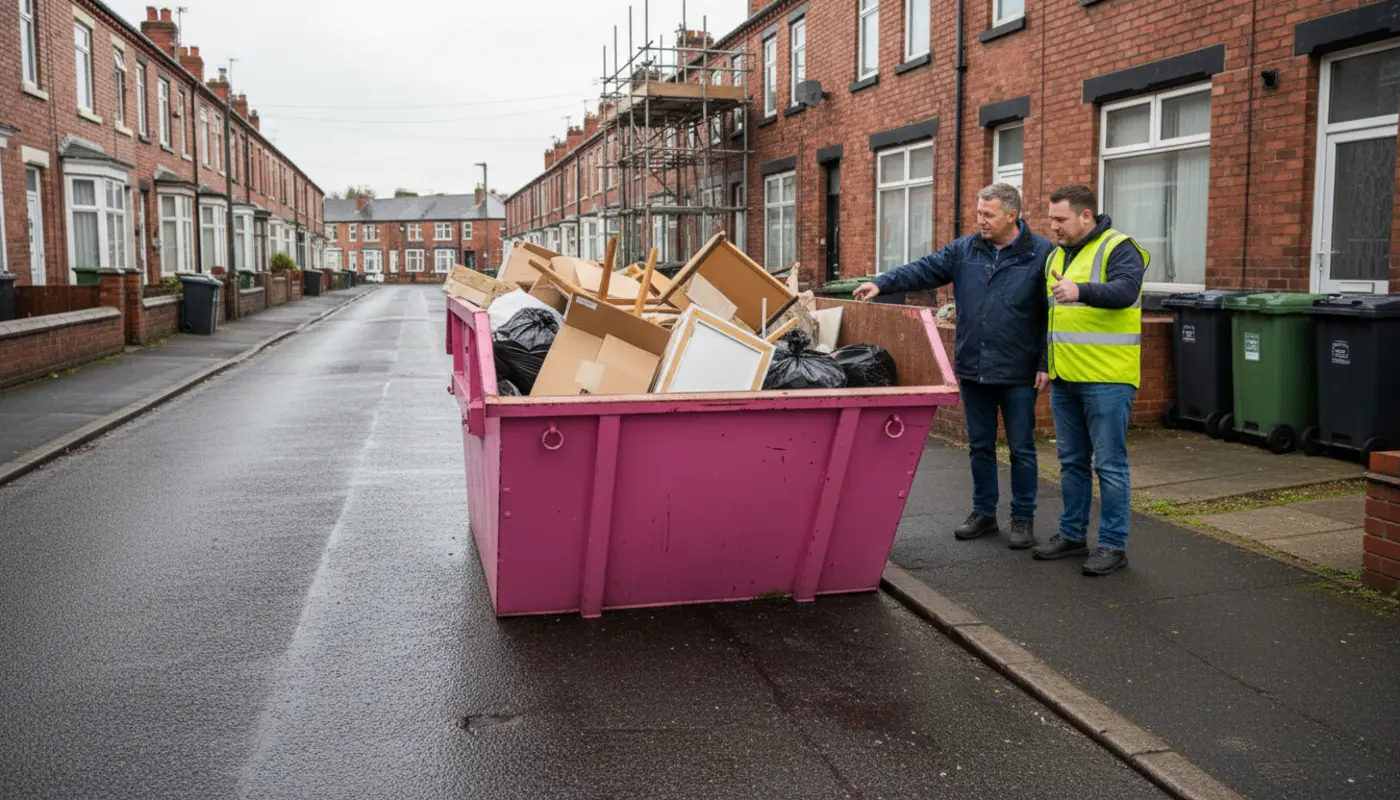
You can fill a skip up to the top edge, but waste must not go above the sides. The load should be level, stable, and fully inside the skip, with nothing sticking out, hanging over, or piled into a mound.
Clear outs, renovations, and garden jobs often create more waste than expected, so it is worth loading the skip carefully from the start. Trying to squeeze extra waste in at the end can lead to collection delays, extra cost, or an unsafe load.
The fill rule is there because a skip has to be lifted, moved, covered where needed, and transported safely through Manchester streets. If waste shifts or falls during lifting or travel, it can put people, vehicles, and property at risk.
Pink Skip Manchester helps homeowners, trades, landlords, and businesses choose the right skip size, load it safely, and avoid collection problems. With local experience around Manchester access, permits, heavy waste, and safe collection, we keep waste removal simple, punctual, and hassle free.
The highest you should fill a skip is to the top edge of its sides. In simple terms, the waste should sit flat inside the skip and stay below the rim. Loose bags, timber, branches, furniture, doors, pipes, and rubble should not rise above the sides.
It is worth checking the whole skip, not just the middle. A skip can look fine from one angle but still have a sofa arm, piece of timber, or broken wardrobe panel sticking out on the other side. Drivers need the load to be safe before they lift it. If you are clearing a house, renovating a bathroom, or sorting garden waste, keep the load even from end to end rather than building a mound in the centre.
An overfilled skip is any skip where the waste is not safely contained within the side walls. This may be a pile of bin bags above the top edge, mixed waste raised in the middle, or long items sticking out from the ends. Waste hanging over the side also counts as overfilling, even if most of the skip looks level.
Waste left beside the skip can also cause problems. It is not part of the booked container and may block pavements, driveways, roads, or access for collection. The easiest check is to look across the top of the skip from all four sides. If the contents break the line of the rim, remove or rearrange the extra waste before collection.
Overfilling a skip is unsafe because loose items can move, slide, or fall when the skip is lifted onto the vehicle. This can put the driver, pedestrians, cyclists, parked cars, and passing traffic at risk, especially on busy Manchester roads.
A skip can also be unsafe even when it looks neat. Heavy waste such as soil, rubble, bricks, concrete, and paving slabs can make a skip too heavy before it reaches the rim. Too much weight can affect lifting equipment, vehicle handling, braking, and road safety. The Health and Safety Executive gives clear advice on stable loads and safe skip handling in its safe use of skip loaders guidance.
Overfilling a skip is best understood as a safety and legal transport issue. Waste must be carried safely, and a skip provider should not move a skip if the load is unstable, sticking out, or likely to spill. In simple terms, an overfilled skip may not be collected because it cannot be lifted or transported safely.
If a skip is placed on a public road, local permit rules may also apply. These can cover safe placement, lights, access, visibility, and removal. In Manchester, skips placed on public roads are subject to council rules, while skips on private land are usually handled differently. Manchester City Council skip permit information explains when road permits may be needed and what local limits can apply. If your skip is going on the road, confirm who is arranging the permit and keep the skip safely loaded throughout the hire period.
Overfilled and overweight skips are different problems. Overfilled means waste is above the sides or sticking out of the skip. Overweight means the contents are too heavy for safe lifting or transport, even if the waste is below the rim.
Light household clutter may fill the space before it reaches a weight limit. Soil, concrete, bricks, and rubble can reach the weight limit before the skip looks full. Uneven loading is another issue, such as heavy rubble placed at one end or tall items leaning against the side. If you are unsure whether heavy waste is suitable for your skip, ask before loading. For more detail on heavy materials, our advice on putting soil in a skip explains why weight matters as much as space.
The best way to load a skip safely is to place heavy, flat waste at the bottom, spread weight evenly, and break down bulky items before they take up space. A steady, level load is safer to lift and usually lets you fit more waste in without going above the rim.
Start with flat and heavy materials such as tiles, small rubble, broken plaster, and bricks. Spread them across the base rather than dropping everything into one corner. Avoid throwing heavy items on top of soft or loose waste, as they can roll, slide, or create awkward gaps.
Bulky items should be taken apart where it is safe to do so. Remove drawers from cabinets, take legs off tables, flatten flat pack furniture, and lay panels flat rather than standing them upright. A wardrobe placed upright can use a surprising amount of space and may rise above the rim. The same wardrobe, broken into panels, can sit neatly along the base or side.
Long items need extra care. Timber, pipes, curtain rails, branches, and old flooring should be cut down or dismantled so every piece fits inside the skip. Do not rest long boards across the top as if the skip is a storage rack. It may seem handy for a moment, but it is one of the quickest ways to cause a delayed or refused collection.
Small waste can help fill gaps when packed well. Flatten cardboard, fold packaging, squash empty boxes, and place smaller items around larger pieces. Load in layers, with heavy flat materials first, bulky broken down items next, medium waste above that, then lighter loose material at the top. Keep checking the height as you go, because it is much easier to fix a rising mound halfway through than when the skip is full.
Use this skip loading checklist before collection to make sure the load is safe, level, and ready to move.
Different Manchester projects create different skip loading problems, so the safest method depends on the waste type. Bathroom work often creates heavy waste, house clearances create bulky waste, and garden clearances often create light but awkward waste.
For bathroom renovations, the main issue is weight. Tiles, toilets, basins, baths, plaster, rubble, and old flooring can become heavy quickly, so keep them low and spread out. Do not fill a large skip to the top with dense rubble unless you have confirmed it is suitable. A smaller skip or separate collection may sometimes be safer and more practical.
For house clearances, bulky furniture is often the biggest space problem. Sofas, wardrobes, shelving, bed frames, and broken chairs should be dismantled as much as possible. Put flat panels against the base or sides, then fill gaps with smaller household waste. If you are unsure what materials are accepted, our page on what you can put in a skip is a helpful place to check before loading.
For garden clearances, cut branches into manageable lengths and shake extra soil from roots where sensible. Loose branches can create a high springy mound, which looks full but wastes space. Grass cuttings, hedge trimmings, old fence panels, and broken planters should be packed carefully so nothing sticks above the rim or catches when the skip is lifted.
For small building projects, plan separate areas in the skip for different materials if it helps keep the load balanced. Timber and plaster should not be used to cover an already heavy rubble base if it pushes the load above the sides. Ask about restricted items before you start, especially plasterboard, paints, chemicals, electrical items, tyres, gas bottles, and anything that may need special handling.
No, a net or tarpaulin cannot make an overfilled skip acceptable. A cover may help contain light loose material when the skip is already loaded correctly, but it cannot fix extra height, too much weight, or items sticking out.
Think of a cover as the finishing touch, not the solution. If a door, branch, mattress, or pile of bags is sticking up, covering it only hides the problem for a short time. The driver still has to lift and move the skip safely, and the waste still has to travel through public spaces without falling or shifting.
If your skip is already too full, stop loading straight away and remove the highest items before collection. Focus first on anything loose, sharp, long, or unstable, then repack flat items lower down where possible.
Do not climb inside the skip, jump on the waste, or try to squash it with machinery unless this has been agreed and is safe. Break down bulky pieces where sensible, spread heavy materials more evenly, and check whether any waste is hanging over the sides.
If you still have too much waste, arrange another suitable skip or speak to the provider about your options. Leaving bags beside the skip, building a mound, or hoping the driver can sort it out on arrival is likely to cause delays. Pink Skip Manchester can advise on skip sizes, heavy waste, restricted materials, and collection access so you can avoid last minute surprises and keep your project moving.
Manchester skip permits are usually needed when a skip is placed on a public road, while skips on private driveways or private land are usually handled differently. Permit rules can include safe placement, lights, access, visibility, and how long the skip can stay in place.
Always confirm the skip location before booking. Make sure there is enough room for delivery and collection, avoid blocking drains or access points, and do not place loose waste around the skip. A well placed skip is easier to load safely, easier to collect, and much less likely to annoy the neighbours, which is always a bonus.
The right skip size depends on both the amount of waste and the type of waste. Light mixed household waste takes up space, while rubble, soil, bricks, and concrete add weight quickly. A bigger skip does not always solve a heavy waste problem, because the weight limit may still be reached before the skip is full.
If you are working on a renovation, garden clearance, or full property clear out, describe the waste clearly when booking. It is usually cheaper and easier to choose the right size at the start than to overfill a smaller skip and need another collection later. Allow room for safe, level loading rather than planning to squeeze in a raised pile at the end.
A good local provider will ask what you are throwing away, where the skip will sit, and whether access is straightforward. These simple details help match the skip to the job and reduce the chance of delays on collection day.
Can I Fill A Skip Above The Rim If I Cover It?
No. A cover does not make an overfilled or unstable skip safe to lift or transport. Waste should stay level with or below the top edge.
Can Waste Be Level With The Top Of The Skip?
Yes, waste can be level with the top of the skip as long as the load is stable, contained, suitable for the skip, and within any weight limit.
What Happens If My Skip Is Overfilled?
Collection may be delayed or refused until extra waste is removed or rearranged. The exact outcome depends on the condition of the load and the provider terms.
Can I Put A Mattress Or Sofa In A Skip?
It depends on the provider and skip type, but the item must fit fully inside the skip without sticking out. Taking bulky items apart can help save space.
Do I Need A Permit For A Skip On My Driveway In Manchester?
A skip on private land usually does not need the same road permit as a skip placed on a public highway. Confirm the location and permit needs before delivery.