

20 Oct 2026 - 8:54 PM
What Happens to Skip Waste? Manchester Recycling Explained

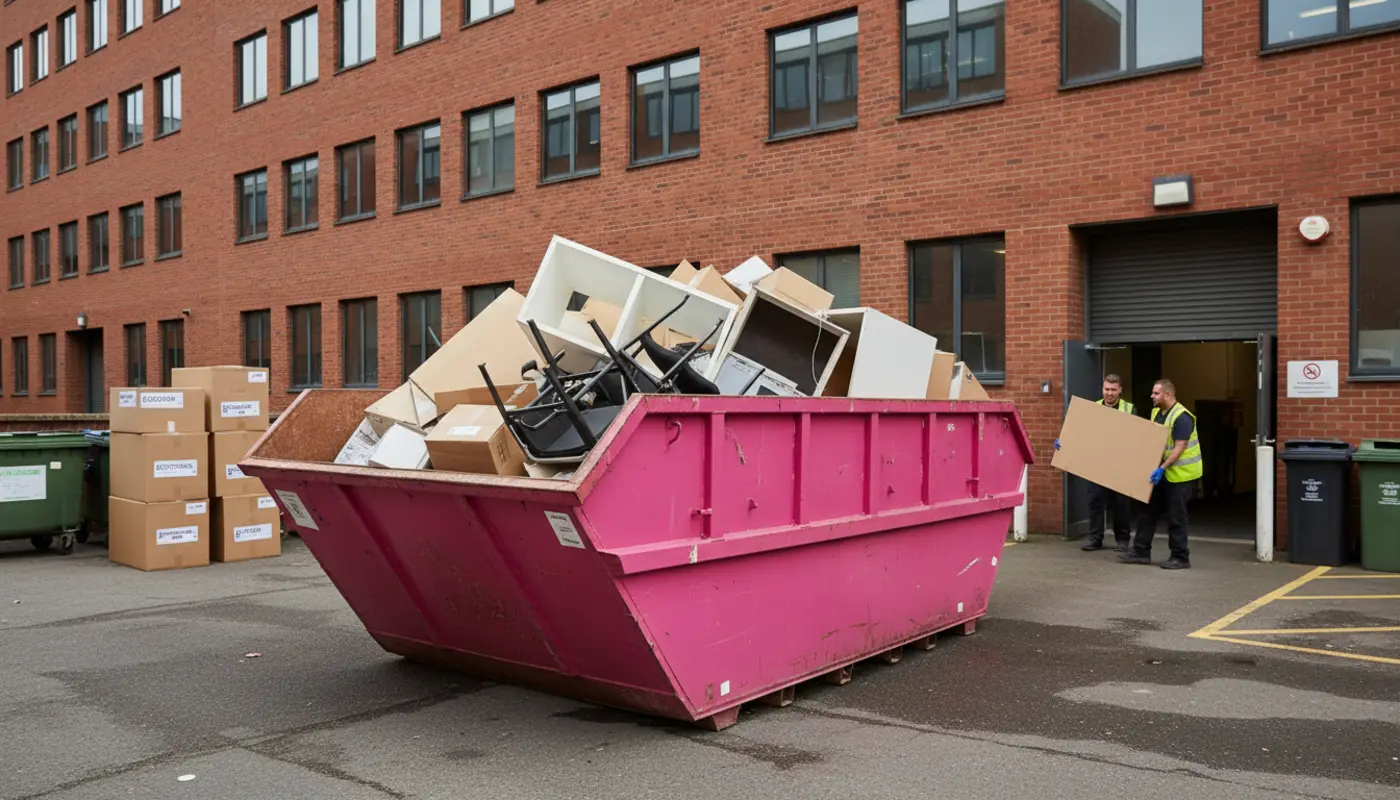
Skip hire for office clearances is a practical way to remove desks, chairs, shelving, packaging and general office rubbish, as long as your business sorts items properly before loading. Reusable furniture, recycling, electrical equipment, confidential records and hazardous items should be separated first so the clearance stays safe, legal and simple.
Office clearances often happen during a move, refurbishment, closure, downsizing project or furniture refresh. The job can look easy at first, then someone opens a cupboard full of old files, spare cables, broken stationery and mystery boxes from years ago.
With years of local experience, a range of skip sizes and its own recycling facility, Pink Skip Manchester helps businesses across Greater Manchester clear offices in an organised and hassle free way. The aim is simple: choose the right skip, reduce disruption and keep waste moving responsibly.
Skip hire for office clearances works best when the skip is used for agreed bulky waste and leftover rubbish, while other materials are sorted before collection day. A skip gives your team one central place for suitable waste, rather than piles of furniture and packaging gathering in corridors, meeting rooms or loading bays.
It is especially useful for office relocations, lease end clearances, refurbishments, storage room clear outs and replacement furniture projects. Instead of arranging several small collections, you can plan one delivery and one collection around the project schedule, which is often much easier for office managers and facilities teams.
The key is to be clear about what is going in the skip before booking. A mixed office clearance can include wood, metal, broken furniture, cardboard, plastic packaging and general rubbish, but not every item from an office belongs in the same container. Computers, batteries, fluorescent tubes and confidential files need extra care because they may require specialist handling or secure disposal.
Most office clearances produce a mix of bulky furniture, packaging, paper, damaged fixtures and general rubbish. Desks and workstations are usually the biggest space takers, especially if they are left whole. Where it is safe to do so, removing legs, separating desk tops and stacking flat panels can make much better use of skip space.
Office chairs are another common item, including task chairs, visitor chairs, stools and meeting room seating. If chairs are still safe and usable, it is worth separating them for reuse, donation or resale before disposal. Broken chairs, worn fabric, cracked bases and damaged arms can quickly add up, so count them when estimating volume.
Shelving, filing cabinets, cupboards, bookcases and lockers can also appear in large quantities during an office move. Metal parts may be recyclable, while wooden storage units may be suitable for the agreed skip stream if they are not reusable. Packaging waste is often underestimated too, as flat pack furniture boxes, bubble wrap, plastic film and polystyrene can fill space fast even when they weigh very little.
General office rubbish can include damaged stationery, old noticeboards, worn carpets, broken blinds, cracked bins, tired kitchen items and non reusable odds and ends from drawers and cupboards. Before loading, it helps to check exactly what can go in a skip, because a few wrong items can cause delays or extra handling on the day.
Some office items should not be placed in a mixed skip without checking first. Computers, monitors, printers, servers, phones, cables and other electrical items are classed as waste electrical and electronic equipment when they are no longer needed. These items often need a separate route so parts can be recovered and any sensitive components are handled correctly.
Batteries, fluorescent tubes, lamps, chemicals, solvents, paint, aerosols, gas cylinders and anything that may contain asbestos should also be kept out of a standard office clearance skip unless you have written confirmation that they are accepted. These materials can create safety risks and may fall under different waste rules.
Confidential paperwork and data bearing items also need care. Filing cabinets full of client records, staff documents, accounts or legal papers should be cleared through a secure process, not tipped into a general mixed load. The same applies to hard drives, memory devices and old laptops, because data protection still matters when an office is being cleared.
Sorting office waste before booking can save money, space and stress. It also helps your business show that it has considered reuse and recycling before disposal, which is good practice and often better for the budget. The simplest approach is to walk through the office and divide everything into five groups: keep, reuse, recycle, specialist disposal and skip waste.
Usable desks, chairs and cabinets may be moved to another branch, offered to staff, donated to a local organisation or sold. Clean cardboard, paper and certain metal items can often be separated for recycling, depending on your workplace arrangements. Electrical equipment, batteries, lamps and confidential records should be identified early, so they do not end up in the wrong pile during a busy clearance day.
The right skip size for office clearance depends on volume, not just the number of staff or the size of the floor. Ten desks in pieces can take up far less space than ten desks left assembled, while a small office with large partitions or old storage units can produce more waste than expected. Bulky office furniture often fills a skip before it gets close to the weight limit.
Before asking for a quote, list the main items being removed. Include the number of desks, chairs, cabinets, shelves, boxes, partitions and packaging piles. Photos are very useful because an experienced skip hire team can often spot whether your waste is light and bulky, dense and heavy, or likely to need more than one collection.
Do not rely only on bin bag estimates for an office clearance, because furniture behaves very differently from bagged rubbish. Measure larger items where possible and think about whether they can be dismantled safely. If you are unsure, reading about how to choose the right skip size for your project can help you understand the factors that affect capacity.
It is also important not to overfill the skip. Waste should not rise above the sides or create an unsafe load, because this can stop collection and may cause delays at exactly the wrong time. If you are clearing a full floor, a large storage area or a busy office after a refurbishment, ask whether a larger commercial skip or more than one collection would be more sensible.
For commercial skip hire in Manchester, placement is just as important as size. A skip placed on private land, such as a service yard, private car park or loading area, is usually simpler than one placed on a public road. You still need permission from the landowner, building manager or landlord, especially in shared offices or managed buildings.
If the skip needs to sit on a public highway, council rules may apply. Manchester City Council requires companies placing skips on the highway within its boundary to meet registration and safety requirements, including insurance, waste carrier details and site information. Your skip provider should be able to guide you on what is needed, but it is always worth confirming the location early.
City centre offices often have extra challenges, including loading bay time limits, narrow streets, bus lanes, pedestrian areas and restricted access hours. Multi storey buildings need planning too, because lifts, stairwells and reception areas can slow down movement. A simple site plan, contact name and clear delivery instructions can prevent a lot of back and forth on the day.
Office clearances run more smoothly when delivery and collection are planned around the working day. If the office is still occupied, early morning, late afternoon, evening or weekend windows may reduce disruption. If the building is vacant, you may have more freedom, but you still need to think about security, lift access and any landlord rules.
Reception and security teams should know when the skip is arriving, who the site contact is and where the container should be placed. Provide mobile numbers, access codes, loading bay booking details, floor numbers and any instructions about fire routes or disabled access. It may sound basic, but the best clearance plans often succeed because someone remembered to tell reception.
Office managers often have to balance staff safety, business disruption and handover dates at the same time. A little planning can make the clearance feel far less rushed and help everyone understand what is happening before the moving starts.
During loading, keep walkways clear and separate staff from the dismantling area. Protect floors, door frames and lifts where heavy furniture is being moved, and make sure fire exits are never blocked. If your team is dismantling desks or shelving, use safe manual handling and keep screws, sharp edges and loose panels under control.
Build in extra time if you can. Having a skip delivered the day before the main clearance gives you time to spot unexpected waste, remove prohibited items and avoid panic before a lease handover. Leaving collection until the final hour is rarely fun, especially when keys are due back and the landlord is already waiting.
Office waste from a business is commercial waste, which means it should be managed through an authorised business waste route rather than treated like household rubbish. Government guidance explains that businesses must reduce waste where reasonably possible, store it securely, use authorised carriers and keep suitable records. You can read the official overview on business and commercial waste responsibilities.
Workplace recycling rules in England also mean many businesses need to separate dry recyclables, food waste and leftover waste. For offices, this commonly affects paper, cardboard, packaging, food from staff kitchens and general rubbish. Micro firms with fewer than ten full time equivalent employees have extra time to meet some requirements, but larger workplaces should already be planning separate streams.
For non hazardous waste leaving your premises, a waste transfer note or similar record is normally required. Keep these records for at least two years, because they show where the waste went and who handled it. A reliable skip hire company should be clear about documentation and should not make the paperwork feel confusing.
The most common mistake is booking a skip based only on the number of employees. Staff numbers do not tell you how many old desks, filing cabinets, boxes and partitions are hiding in the building. A better estimate comes from a simple inventory, photos and a quick conversation about bulky items.
Another mistake is mixing everything together in a rush. Electrical equipment, confidential records, batteries and lamps should be removed from the general waste pile before anyone starts loading. Clean cardboard and recyclable packaging should also be separated where your workplace recycling arrangements require it.
Many businesses also forget about access until the day of delivery. If the skip cannot reach the loading bay, if the building manager has not approved the placement, or if parked cars block the route, the whole schedule can slip. Confirm access, working hours, permission and collection times before the clearance starts.
Finally, avoid sending good furniture straight to disposal. Reuse can reduce waste volume, cut costs and help local organisations. Even if only a few chairs or cabinets are saved, it is still better than paying to throw away items someone else could use.
To arrange an office clearance skip, prepare a short summary of the job before calling. Include the office location, main waste types, item quantities, photos if available, preferred delivery and collection times, and whether the skip will sit on private land or may need highway placement. This helps the quote reflect the real job, not a guess made from a quick glance around the room.
Pink Skip Manchester works with local businesses that need practical skip hire for office waste disposal in Manchester and the surrounding areas. With local knowledge, multiple skip sizes and recycling support through its own facility, the team can help you plan the right container and collection timing for your office clearance.
If you are unsure what size you need, explain the furniture count, packaging volume and access limits, then ask for guidance. A few details at the start can prevent an undersized skip, an awkward collection or a last minute scramble when the office needs to be handed back.
Can Desks And Office Chairs Go In A Skip?
Ordinary unwanted desks and office chairs may be suitable for an agreed office clearance skip, but reusable items should be separated first. Always check if any item contains electrical parts or unusual materials.
Can Office Computers And Monitors Go In The Same Skip?
Computers, monitors, printers and similar electrical items should not automatically go into a mixed skip. They usually need an appropriate waste electrical route.
Can Cardboard Packaging Go In An Office Clearance Skip?
Clean cardboard should normally be separated for recycling where your workplace arrangements require it. Contaminated or mixed packaging may need different handling.
Do Manchester Businesses Need A Permit For A Skip?
It depends where the skip is placed. Private land may need landlord or building manager approval, while a public road or highway may involve council requirements.
How Do I Choose A Skip Size For An Office Clearance?
List the furniture, packaging and general waste, then share photos and access details with the skip provider. Volume, dismantling and bulky items matter more than employee numbers alone.