
20 Oct 2026 - 8:54 PM
What Happens to Skip Waste? Manchester Recycling Explained
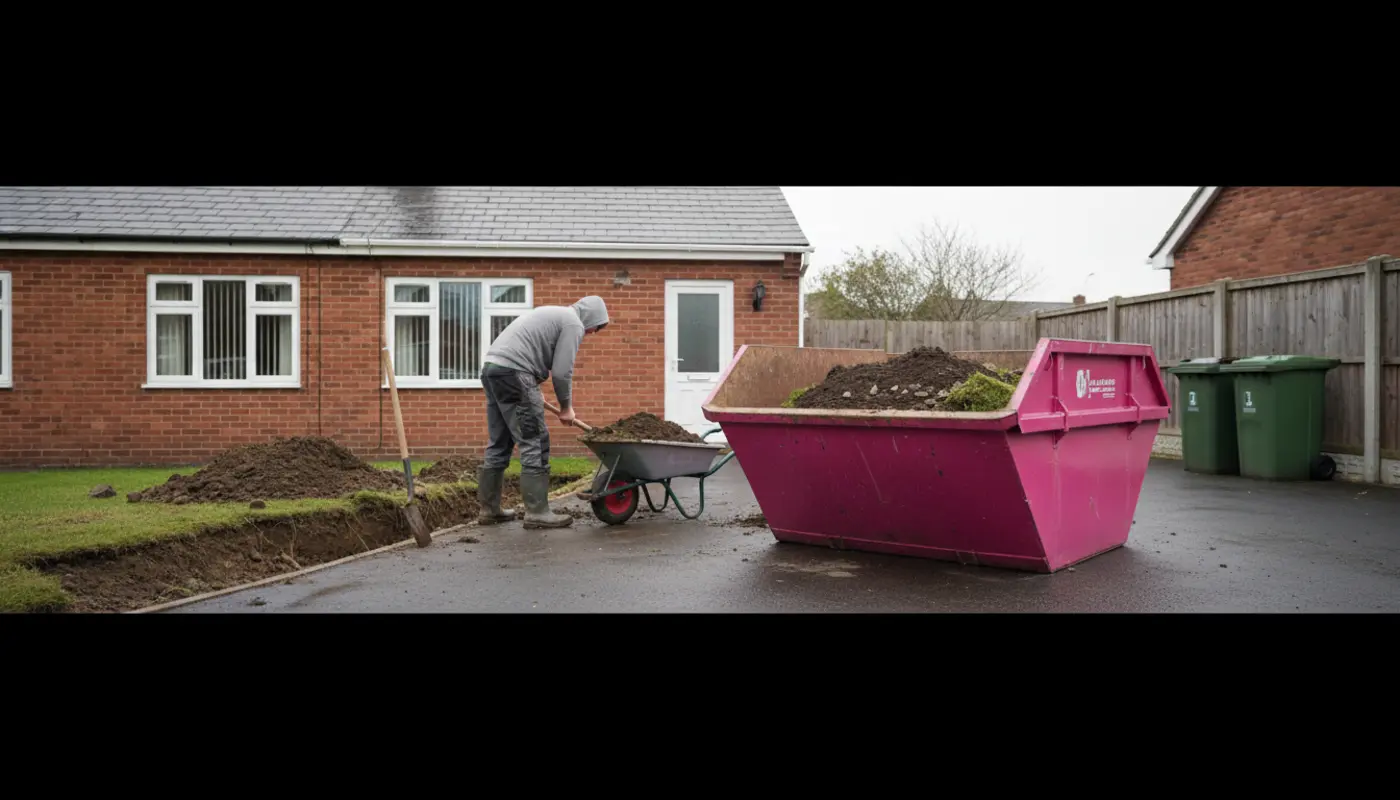
Yes, you can put soil in a skip safely when the soil is clean, not contaminated and the skip is suitable for heavy waste. The main thing to remember is that soil is much heavier than normal garden rubbish, so the skip may reach its safe weight limit before it looks full.
That's the part that catches many people out during garden clearances, patio work, driveway digging and small building jobs. A skip is measured by size, but the collection lorry also has a safe lifting limit, so weight matters just as much as space.
If you are digging out a garden and are not sure where to start, Pink Skip Manchester helps homeowners, landlords and trades across Greater Manchester choose the right skip for soil, rubble and other heavy waste. You can get clear advice before booking, with practical support from a local team that deals with these loads every day.
Soil can usually go in a skip if it is clean, ordinary soil from a garden, lawn, border or small landscaping job. It should not contain oil, fuel, chemicals, asbestos or anything else that could make it unsafe. The skip company should always be told that soil will be going in the skip before delivery.
Clean excavated soil from a flower bed, lawn edge or small garden project is normally accepted, depending on the provider's rules. Soil mixed with stones, bricks or concrete may also be accepted, but it will be heavier and may need a smaller skip or a different collection plan.
If the soil comes from unknown ground, old industrial land, fuel stained areas or a place where asbestos may be present, it should not be placed in a normal domestic skip without checks. UK waste rules treat hazardous soil and non hazardous soil differently, so it is better to ask first than risk a refused collection.
Soil is classed as heavy waste because it is dense, especially when it is wet, clay rich or mixed with rubble. Light waste such as cardboard, packaging and household clutter fills a skip by space, while soil often reaches the safe lifting limit before the skip is anywhere near full.
Two skips of the same size can have very different weights. A skip filled with light garden cuttings is much easier to lift than a skip filled with damp earth. This is why the type of waste matters when choosing a skip, not just the amount of space it takes up.
A large skip is not always the best choice for soil disposal in Manchester. A bigger skip gives you more room, but it does not mean you can fill it to the top with soil, clay, hardcore or paving slabs.
A smaller skip is often better for soil because it helps keep the total load within a safe and manageable weight. This is especially useful when the waste is mainly soil, rubble, concrete, bricks or paving, as these materials become heavy very quickly.
For many home garden jobs, a mini skip or midi skip may be more practical than a larger skip. If you are unsure what size you need, describe the job clearly before booking and ask for advice. For a broader look at skip sizing, the advice on choosing the right skip size for your project can help you understand how waste type affects the decision.
Smaller does not mean unlimited. Even a small skip must not be filled above the stated level, and the provider may still set a maximum weight depending on the vehicle, skip type and waste facility.
There is no single UK weight limit for every skip filled with soil. The limit depends on the skip size, collection vehicle, type of soil, waste facility and the terms set by the skip company.
Dry loose soil will usually be lighter than wet clay. Soil dug up after heavy rain can be much heavier than it looks. Soil mixed with hardcore, bricks or concrete adds even more weight, so it is important to be honest about what will go into the skip.
A good skip provider will ask about the type of waste before recommending a size. If a skip is booked for light garden waste but is then loaded with damp soil and rubble, collection can become difficult and extra charges may apply.
The best skip size for soil depends on how much soil you have, how wet it is and whether it is mixed with other heavy materials. A few wheelbarrows from a small border may suit a small skip, while a patio dig out with soil, bricks and slabs needs more careful planning.
For a small flower bed, clean soil is usually straightforward if the skip is suitable and the weight is kept under control. Lawn removal can be different because turf contains soil and roots, which makes it bulkier than many people expect. A driveway or patio project can be heavier again because paving, rubble and sub base material all add weight.
Large excavation work, such as foundations or major landscaping, may not suit a standard domestic skip. In that case, staged collections or a specific heavy waste arrangement may be a better fit.
Soil and rubble can often go together, but they create one of the heaviest common skip loads. Bricks, concrete, tiles, hardcore and paving slabs should always be mentioned when booking because they can affect the recommended skip size and collection method.
Soil and turf can also be accepted in many cases, but turf is not just grass. It has roots, soil and moisture attached, so it takes up more space and weighs more than loose grass cuttings.
Soil mixed with branches, leaves or hedge trimmings may affect sorting at the waste facility. If you are dealing with a wider garden clearance, it is worth checking what materials can go together. The practical advice on what you can put in a skip explains common skip materials in more detail.
Household rubbish should not be mixed into a soil load without checking first. Mixed waste may be handled differently from inert waste, which is waste that does not easily break down or react, such as soil, bricks and concrete. Keeping materials separate can sometimes make disposal simpler and cleaner.
Soil that may be contaminated should not go in an ordinary skip without assessment. Warning signs include oil stains, petrol or diesel smells, chemical odours, unusual colours, fly tipped material, asbestos fragments or soil from land with a known industrial history.
Official UK guidance explains that construction and demolition waste must be assessed and classified before it is moved. This includes the difference between soil containing hazardous substances and soil and stones that do not contain hazardous substances. You can read the relevant official information on GOV.UK construction and demolition waste classification guidance.
If you spot anything suspicious, stop loading and ask for advice. It is much easier to deal with a possible issue before the skip is filled than after contaminated material has been mixed with otherwise clean waste.
Loading soil properly makes collection safer and helps avoid delays. Spread the soil evenly across the base of the skip rather than piling it into one tall mound, as an uneven load can make lifting harder and less stable.
Keep the waste below the sides and within the marked fill level if there is one. Material sticking above the rim can fall during transport, and an overfilled skip may be refused collection until the extra waste is removed.
Do not add liquids, chemicals, plasterboard, asbestos, paint tins or other restricted waste to a soil load. If you want to add rubble, paving or concrete, ask first so the provider can confirm whether the skip and vehicle are suitable.
If a skip is too heavy, the driver may be unable to lift it safely. In that situation, the skip might be left in place until some material is removed, or the load may need to be split into more than one collection.
Extra charges can apply if the load does not match what was agreed when booking. This is not about being difficult. It is about keeping the driver, vehicle, road and nearby people safe.
A skip can also be refused if waste is above the fill level or contains items that should not be there. The simplest way to avoid problems is to be clear about the waste, choose a suitable skip and stop loading before the skip looks overloaded.
If your skip is placed fully on a private driveway, garden or other private land in Manchester, a skip permit is usually not needed. If the skip sits on a public road or highway, a permit is required, and the skip operator normally handles the application with the council.
This matters for soil because heavy loads can be harder to move once the skip is dropped. Before delivery, check that the location is firm, level and easy for the collection vehicle to reach, especially on narrow Manchester streets or terraced roads with parked cars.
If the skip needs to go on the road, allow time for the permit process and make sure the space is suitable. The provider can explain the practical steps, including lights or markings where required.
You can estimate soil volume by measuring the length, width and average depth of the area you are digging, then multiplying those three measurements together. If you measure in metres, the result is in cubic metres, which is useful when asking for skip advice.
For uneven areas, use an average depth rather than guessing from the deepest point. If you are digging several separate patches, measure them separately and add the results together.
Do not turn that volume into a guaranteed weight without expert advice because moisture, clay content, stones and rubble can change the weight a lot. When booking, say whether the soil is dry, wet, clay rich, attached to turf or mixed with hard materials.
Clean soil may be useful elsewhere in the garden, especially for levelling low areas, filling raised beds or building borders. If the soil is good topsoil, keeping it separate from rubble and subsoil can make reuse much easier.
Reuse is not always practical, especially if you have far more soil than you need or the soil quality is poor. Once soil is taken away from a site, it may be treated as waste, so proper handling and disposal still matter.
If you are unsure, ask before you dig too much. A quick chat can help you decide whether to reuse some soil, skip the rest or arrange a more suitable collection for a larger project.
Can You Put Topsoil In A Skip?
Yes, clean topsoil can usually go in a suitable skip, as long as it is not contaminated and the weight limit is respected.
Can You Put Clay Soil In A Skip?
Clay soil can usually go in a skip, but it is often very heavy, especially when wet, so a smaller skip is commonly more suitable.
Can Soil And Rubble Go In The Same Skip?
They can often go together, but both materials are heavy, so you should confirm the skip size and weight limit before loading.
Can You Put Turf In A Skip?
Turf may be accepted, but it contains soil, roots and moisture, which makes it heavier and bulkier than simple garden cuttings.
Can Contaminated Soil Go In A Normal Skip?
No, not without proper checks. Soil affected by oil, fuel, chemicals, asbestos or unknown substances may need specialist assessment and disposal.