
21 Nov 2026 - 4:17 PM
Roof Replacement Waste: Skip Hire Tips for Homeowners
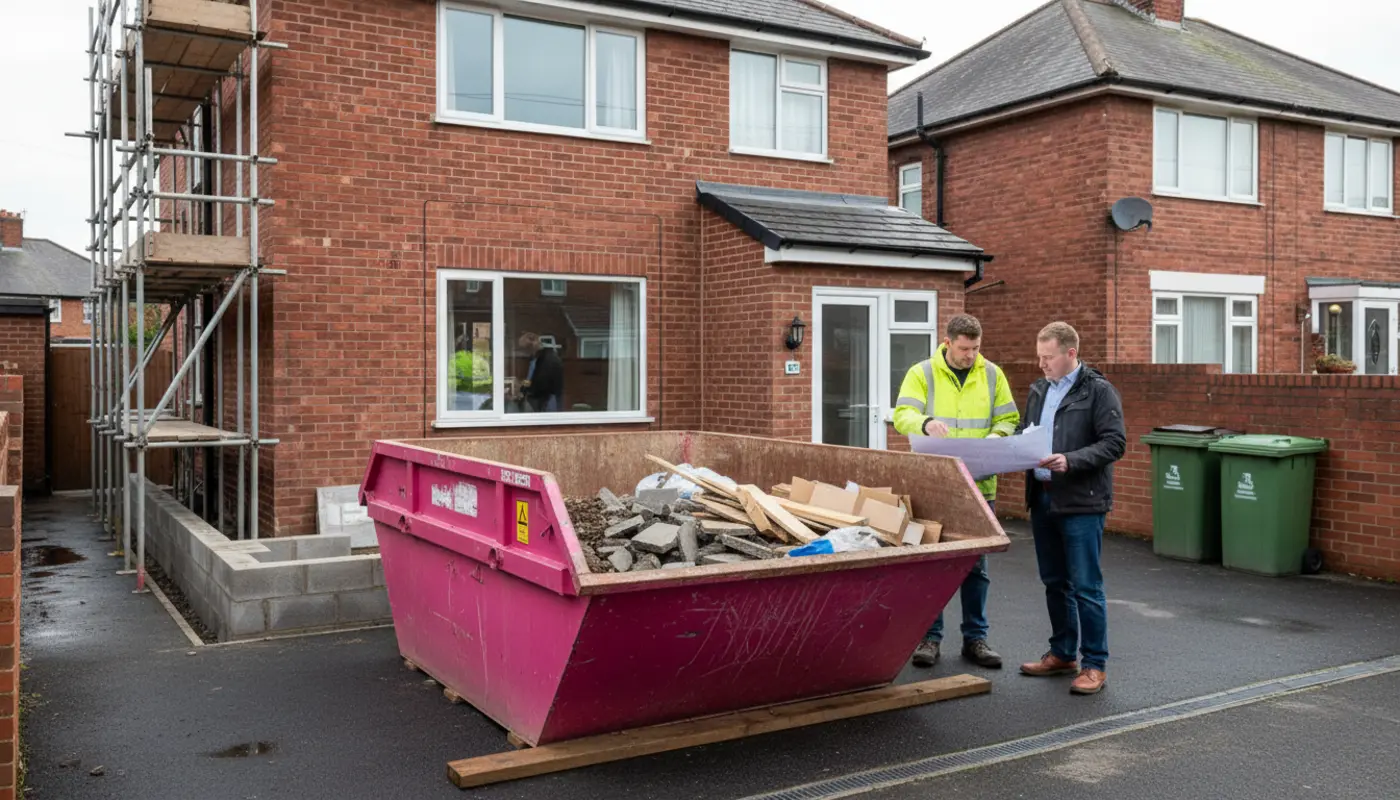
Skip hire for home extensions should be planned before work starts, not after waste begins to pile up. The safest and most cost effective approach is to plan waste removal by project stage, keep heavy soil and rubble separate from lighter building waste where possible, and book skip exchanges around your builder's schedule.
A home extension can be exciting, but it can also bring mud, noise, tight spaces and a fair amount of disruption. Waste builds up quickly, and if it is not planned from day one, it can slow the whole job down.
Different stages create different types of waste. Foundations may produce soil, clay and concrete. Demolition may create brick, plaster, tiles and timber. Later stages often bring plasterboard, insulation, packaging, flooring offcuts and decorating waste. Treating everything as one big pile can lead to delays, extra costs and a messy site.
Pink Skip Manchester helps homeowners, landlords and trades across Greater Manchester plan practical skip hire around real building work, with suitable skip sizes, reliable collections and a team that understands local access issues and construction waste.
Skip hire for home extensions should be arranged before the first wall is opened up or the first trench is dug. A skip that arrives too late can leave builders working around piles of rubble. A skip that is too small can fill before the messy stage has even finished, which means more handling, slower progress and extra stress on site.
Good waste planning protects the project programme as well as the budget. If demolition waste blocks access for concrete, or excavation spoil is sitting where bricks need to be delivered, the job can quickly lose momentum. A clear plan also helps avoid overfilled skips, unsafe walkways and last minute collections that may cost more than expected.
Before work begins, ask your builder what waste is likely at each stage. Check whether soil needs removing separately, whether the driveway will still be needed for deliveries, and when the messiest parts of the work will happen. Link skip deliveries and exchanges to demolition, groundworks, brickwork, roofing, plastering and final clearance. That simple conversation can make the site safer, tidier and easier to manage from the start.
A home extension produces different waste as the work moves forward, so the skip plan should match each stage. During demolition and strip out, common waste includes bricks, blocks, old plaster, tiles, timber, doors, window frames and damaged fittings. Some items may be reusable, but most will need sorting and proper disposal.
Groundworks often create the heaviest waste. Soil, clay, stones, roots and hardcore may not look bulky at first, but they can reach skip weight limits very quickly. Foundations and drainage work can add concrete, pipe cuttings, more rubble and sometimes wet material, which is harder to manage without a clear collection plan.
Once the shell is built, the waste usually becomes more mixed. Brick cuttings, block offcuts, timber, plastic wrapping, insulation, cardboard and fixings can build up fast. Later stages bring plasterboard, plaster bags, flooring offcuts, kitchen packaging, protective film, paint tins and small finishing waste. Each stage needs a sensible place for waste to go, otherwise the site becomes cluttered just when trades need space to work.
The right skip strategy depends on the type of waste being produced at that point in the build. Heavy waste needs careful weight planning, while lighter waste often needs more space. Matching the skip to the phase is usually better than guessing one size at the start and hoping it works for the whole project.
Soil, concrete, bricks and hardcore are dense materials. This means a skip can be full by weight before it looks full by space. It is one of the most common surprises during extension projects. A large container filled with soil can become too heavy to move safely, so skip size is not the only thing to think about.
For excavation waste, estimate the trench or dig out size before booking. If the project includes a large foundation, drainage run or patio removal, tell the skip provider exactly what is coming out of the ground. Soil may also need checking if there is any chance of contamination, especially on older sites, former commercial plots or land that has been filled or changed in the past.
Timber, cardboard, plastic packaging, insulation and joinery offcuts behave differently from rubble. They are usually lighter, but they fill space quickly. A skip can look full after only a few days of deliveries if packaging is not flattened or bulky materials are thrown in without care.
Plasterboard needs special attention because it is often handled separately from general mixed waste. Always confirm whether it can be accepted before loading it into a skip. If your extension includes a new kitchen, utility room or open plan living space, finishing waste can be surprisingly bulky, even though it is not as heavy as soil or concrete.
The right skip size for a home extension depends on the extension size, the amount of demolition, the volume of soil, and how much room is available on site. A small rear extension with limited digging will not need the same plan as a two storey build with internal knock through work and a full kitchen refit.
Mini and midi skips can suit smaller tasks, such as early strip out, bathroom removal, light finishing waste or jobs where driveway space is tight. Builders skips are often useful for mixed construction waste, moderate amounts of brick, timber and packaging, and general renovation stages. If you are comparing options, this practical guide to builders skip sizes and best uses can help you choose a sensible option.
As a simple stage guide, a mini or midi skip can work well for strip out, small room removals and light early waste. A builders skip is often suitable for brickwork, timber, mixed construction waste and general renovation stages. Heavy groundworks may need a smaller skip or planned exchanges because soil and concrete reach weight limits quickly. Plastering and final clearance often need space for lighter bulky waste, such as packaging, insulation, flooring offcuts and protective materials.
Larger skips may suit bigger volumes of lighter construction waste, especially during fit out or final clearance, but they still need suitable access and careful loading. Roll on roll off containers are much larger waste containers used for high volume jobs. They are usually only worth considering for larger domestic projects with plenty of space and vehicle access. They are not always the best answer for heavy excavation spoil, because weight limits still matter.
One large skip can work well for a short and simple project with predictable waste and good access. It reduces delivery movements and keeps the admin simple. The downside is that it can sit on site for too long, take up valuable space, fill too early or become a place where every odd bit of waste from the job gets thrown in.
Several skips or planned exchanges usually work better for multi week extensions. They allow you to clear demolition waste before excavation starts, remove heavy spoil before brick deliveries arrive, and switch to a more suitable skip for timber, packaging and plastering waste. This phase based approach is often cleaner and better for the budget.
A practical schedule might include one skip for strip out, a separate arrangement for soil and rubble, another skip for the main construction phase, an exchange before plastering, and a final collection for fit out waste. The exact plan should reflect the builder's programme, access, material types and how quickly waste is likely to build up.
The best skip position is close enough to load safely, but not so close that it blocks work, deliveries or household access. A driveway is often the simplest option, as long as it is firm, level and suitable for the weight. It is also worth protecting paving where needed, and avoiding drains, inspection covers, soft ground or areas that may crack under pressure.
If the skip needs to go on a public road in Manchester, a permit is normally required. Manchester City Council explains local permit rules on its skip permit information page, including highway placement and restricted locations. In many cases, the skip operator applies for the permit, but you still need to allow enough time before work starts.
Before booking, measure the available space and check the route. Look at the driveway width, gate opening, parked cars, low branches, overhead cables, turning space and distance from the extension. Also think about where bricks, blocks, sand, cement and plasterboard will be delivered. A skip that seems perfectly placed on Monday can become a problem when materials arrive on Wednesday.
Extension waste is easier to manage when heavy materials are kept apart from lighter mixed waste. Soil, bricks, concrete, stones and hardcore should be separated where practical. These are often called inert materials, which simply means they do not easily break down or react. They are usually easier to process when they are not mixed with plastic, timber, plasterboard or general site waste.
Reusable materials should be protected before they become waste. Good bricks, clean timber, doors, fittings and spare soil for landscaping may have a use elsewhere on the project. Keeping these items dry and out of the main waste pile can reduce disposal volume and support the waste hierarchy. In simple terms, that means prevent waste first, then reuse, recycle and only dispose of what is left.
For heavy materials, it is worth understanding how weight affects collection. This guide to skip weight limits for heavy waste explains why soil, concrete and rubble need careful planning, even when there appears to be space left in the container.
Some materials from an extension should not go into a standard skip. Asbestos, chemicals, solvents, paint, gas cylinders, batteries, fluorescent tubes, electrical items, liquids, clinical waste and contaminated soil all need specialist advice or separate handling. Never assume something is acceptable just because it came from a house.
Older properties can contain hidden issues, especially around roofs, garages, floor coverings, pipe boxing and textured coatings. If asbestos is suspected, stop work and arrange a proper check before disturbing it. Putting hazardous material in an ordinary skip can create serious safety risks, and the load may be refused.
Plasterboard is another common issue. It is not the same as general rubble, and it may need to be separated depending on the collection route. When in doubt, ask before loading, because sorting it out after it has been buried under other waste is never a pleasant job.
Good waste planning helps keep a home extension on budget by reducing delays, avoiding failed collections and matching each skip to the right stage of work. Waste costs can rise when containers are guessed rather than planned. Paying for a skip that is too large can waste money, but ordering one that is too small can mean repeated collections, extra handling and slower progress.
Poor planning can also lead to avoidable charges. An overweight skip may not be collected as expected, an overfilled skip can lead to a failed collection, and a rushed exchange can cost more if it is needed at short notice. If waste blocks the driveway, material deliveries may be delayed, which can leave trades waiting around.
Planning reduces downtime. If a skip exchange is booked before demolition waste blocks the next trade, the site keeps moving. If excavation spoil is removed before brickwork starts, builders have room to work and deliveries can happen smoothly. Small timing decisions can make a big difference to the pace and feel of the project.
Pink Skip Manchester has its own recycling facility and years of local experience, which helps make extension waste removal more organised and responsible. By discussing your project stages, expected waste and access details early, you can get a skip plan that suits the job rather than a one size fits all guess.
Before booking a skip for a home extension, share the extension type, approximate size, whether it is single storey or two storey, and whether there will be demolition or internal knock through work. Mention the likely amount of soil, concrete, brick, hardcore, timber, plasterboard and packaging, even if the figures are only estimates from your builder.
Also provide the property postcode, proposed skip location, driveway details, access restrictions, start date and expected project length. If the skip may need to go on the road, say so at the start, as permit timing can affect delivery. The more detail you give, the easier it is to plan reliable skip hire, sensible exchanges and a tidy site from the first day of work.
What Size Skip Do I Need For A Home Extension?
It depends on the extension size, demolition work, excavation spoil and type of waste. Heavy soil and rubble need careful weight planning, while timber, insulation and packaging often need more space.
Can I Use One Skip For The Whole Extension?
Sometimes you can, especially on a small and simple project. For most larger or multi week extensions, planned exchanges are usually more reliable because the waste changes as the job moves forward.
Can Soil And Concrete Go In The Same Skip?
Do not assume this without checking first. Both are very heavy, so acceptance rules and weight limits should be confirmed before booking.
Do I Need A Permit For A Skip On My Driveway In Manchester?
A skip on private land, such as a driveway or garden, usually does not need a highway permit. A skip on the public road normally does.
Can I Put Asbestos In A Skip?
No, asbestos must never go into an ordinary skip. It needs specialist assessment, handling and disposal by authorised professionals.