

15 Sep 2026 - 3:44 PM
The Best Skip Size for a Kitchen Renovation

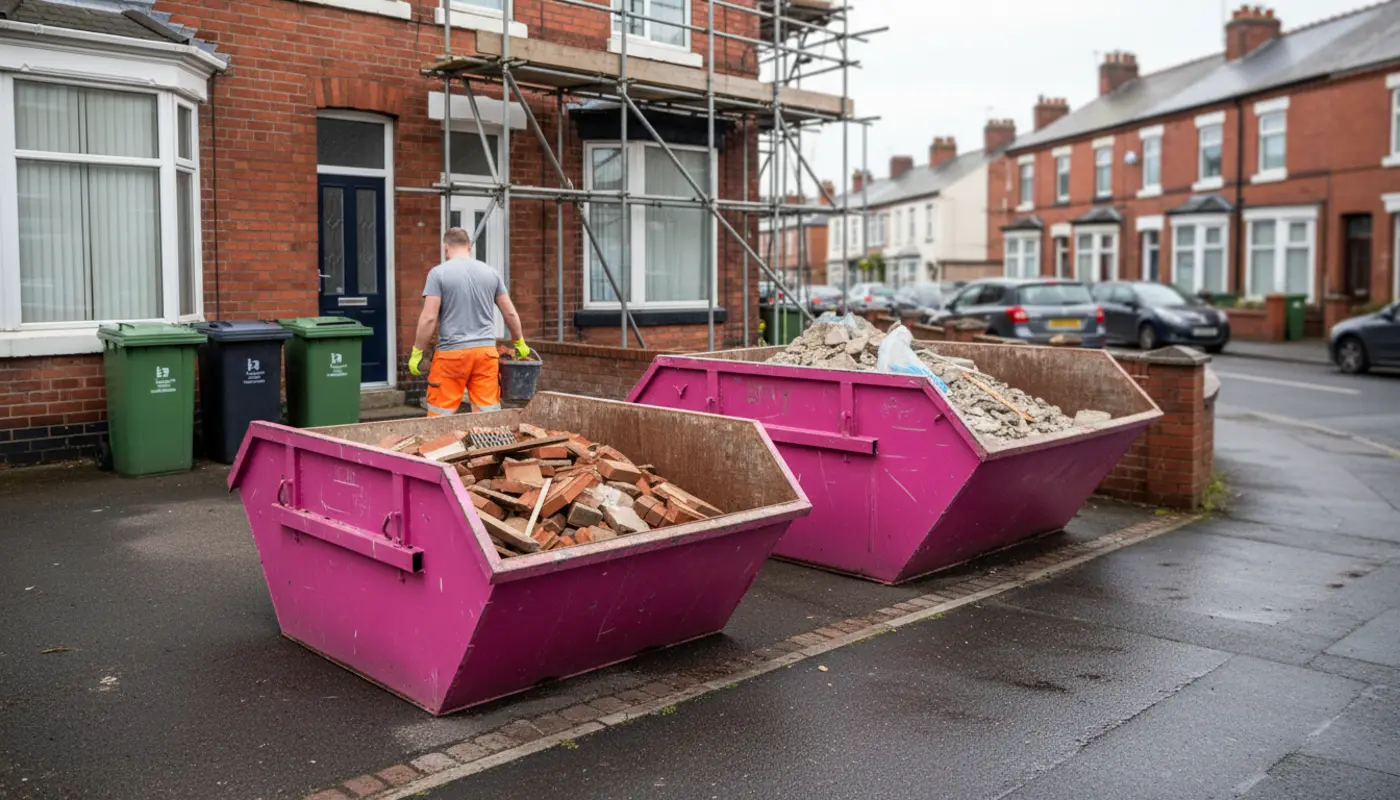
A builders skip is an open top waste container used for building, renovation, demolition, and landscaping waste. In the UK, a builders skip usually means a 6 yard or 8 yard skip. These sizes are popular because they can handle bulky construction waste, heavy rubble, and mixed renovation materials when used within safe loading limits.
The best builders skip size depends on what you are throwing away, how much waste you expect, how heavy the materials are, and where the skip will be placed. Bricks, soil, and concrete are much heavier than timber, packaging, and old kitchen units, even when they look like a similar amount in a pile.
Pink Skip Manchester helps homeowners, landlords, and trades choose practical skip sizes across Greater Manchester. Local knowledge, reliable collections, and a recycling facility help suitable materials move through the right waste route responsibly.
A builders skip is used for waste from construction, refurbishment, and outdoor improvement work. It is a common choice when a wheelie bin is far too small, but a large commercial container would be more than the job needs.
Typical uses include kitchen rip outs, bathroom renovations, small extensions, loft conversions, garage conversions, garden landscaping, brick wall removal, patio removal, and general building rubble disposal. Builders skips are popular because they can take many types of mixed construction and demolition waste, as long as the materials are accepted by the skip provider.
Allowed waste may include timber, tiles, ceramics, rubble, non hazardous plaster, old fixtures, packaging, and general renovation waste. A builders skip is not suitable for every item on site, so restricted waste should always be checked before anything goes into the skip.
Builders skip sizes are measured in cubic yards, which describes the space inside the container. A 6 yard builders skip holds about 4.6 cubic metres, while an 8 yard builders skip holds about 6.1 cubic metres. As a rough guide, a 6 yard skip may hold around 50 to 60 black bin bags, while an 8 yard skip may hold around 60 to 80 black bin bags.
These figures are useful, but they are only estimates. Real capacity depends on the skip shape, how neatly waste is loaded, whether bulky items are broken down, and how dense the materials are. A skip full of flat packed cupboards is very different from a skip half full of wet soil.
If you are comparing options, it is worth reading more about choosing the right skip size for your project before booking.
A 6 yard builders skip is often called a small builders skip. It is one of the most practical choices for domestic building work because it gives useful capacity without taking up as much space as a larger container.
This size is commonly used for bathroom strip outs, kitchen renovations, small garage conversions, plaster removal, old tiles, timber, packaging, and smaller loads of mixed rubble. It is also helpful when access is limited. Many Manchester homes have tight driveways, terraced streets, narrow roads, or limited parking nearby, so a 6 yard skip can be easier to place.
A 6 yard skip gives enough room for a sensible amount of renovation waste while reducing the risk of ordering more skip space than you need. If you are removing mainly heavy materials, such as bricks, concrete, blocks, or soil, the skip may reach its safe weight limit before it looks full. It is important to mention the waste type when booking.
For a typical bathroom renovation, a 6 yard skip can be a comfortable choice if the job includes tiles, sanitaryware, old timber, packaging, and some rubble. Smaller bathrooms may need less space, but many people prefer having a little spare room rather than finding the skip full while the old bath is still waiting in the hallway.
An 8 yard builders skip is often called a large builders skip. It is one of the most common choices for bigger renovation work because it suits larger volumes of mixed waste.
This size is often used for multi room refurbishments, bigger kitchen and utility room rip outs, house renovation stages, shop fit outs, office refurbishments, and larger extension projects. It gives more room when the waste is bulky rather than extremely heavy.
The extra space is useful when waste includes timber, boards, cabinets, packaging, accepted insulation materials, and general construction debris. It can also work well when trades are producing waste over several days and need to keep the site tidy.
Bigger does not always mean better. An 8 yard skip loaded heavily with soil, hardcore, bricks, or concrete may become too heavy to collect safely, even if there is still room near the top. If your project involves dense inert waste, ask for advice before choosing the largest skip available. It may be better to use a 6 yard skip, arrange more than one collection, or separate heavy waste from bulky renovation materials.
The main difference between a 6 yard and 8 yard builders skip is capacity. A 6 yard skip suits moderate building work, tighter access, and mixed loads where space is limited. An 8 yard skip suits larger volumes, multi room jobs, and bulky waste where the main issue is size rather than weight.
For example, a kitchen renovation with cabinets, worktops, packaging, and some tiles may suit a 6 yard skip. A larger refurbishment involving several rooms may justify an 8 yard skip. Driveway removal, patio breaking, or garden excavation can create heavy inert waste quickly, so the biggest skip is not always the safest choice.
The right option is the skip size that can be filled safely, collected legally, and matched to the materials. This matters because waste volume and waste weight are not the same thing.
A builders skip holds waste by volume, but the collection vehicle also has to lift the weight. This is where many people get caught out. Light waste, such as packaging, timber, and old units, tends to fill the skip by space. Heavy waste, such as concrete, soil, bricks, rubble, and roof tiles, can reach the weight limit long before the skip is full.
Bin bag estimates are helpful for household type waste, but construction waste rarely packs as neatly. A broken bathroom suite, tiles, pipes, and plasterboard can create awkward gaps. Timber can be stacked neatly if cut down, while rubble settles heavily at the bottom.
If your waste is mixed, aim for a realistic estimate rather than trying to use every last inch. For detailed bag capacity comparisons, the article on how many bin bags fit in a skip gives more examples.
Different construction jobs suit different builders skip sizes because each project creates a different mix of bulky and heavy waste. A bathroom strip out often starts with a 4 yard or 6 yard skip, depending on the room size and how much tile, plaster, and sanitaryware is coming out.
A kitchen renovation usually starts around 6 yards because cabinets and packaging take up space, while tiles and flooring add weight. A small extension may use a 6 yard skip for mixed building waste, although excavation soil may need separate planning.
A larger extension may need an 8 yard skip or several planned collections because waste is produced in stages. A loft conversion can suit either 6 yards or 8 yards because timber, plasterboard, and packaging are bulky. A garage conversion often fits well with a 6 yard option, unless there is a lot of blockwork, flooring, or roofing waste.
If you are digging out a patio or removing a wall, talk through the amount of concrete, hardcore, or brick before booking. Heavy materials need careful loading and may change the best skip size.
Soil, bricks, and concrete can often go in a builders skip, but only if the skip provider accepts them and the load stays within safe weight limits. These are heavy inert waste materials, which means they are dense and can make the skip too heavy very quickly.
Clean hardcore and rubble may also be handled differently from mixed renovation waste, so it is always worth being clear about what is going in. Large amounts of soil are a good example. A garden project can produce more weight than expected, especially if the soil is wet.
Concrete slabs and bricks also stack densely. The skip may look like it has spare room, but the weight can still create a collection problem. If your job includes excavation, driveway removal, or structural demolition, ask about the best arrangement before the skip arrives.
Ordinary builders skips are not suitable for hazardous or specialist waste. Items that are commonly restricted include asbestos, paints, solvents, oils, fuels, gas cylinders, batteries, chemicals, clinical waste, liquids, fridges, freezers, electrical appliances, explosives, and fireworks.
Plasterboard can also have special handling rules, so it should be mentioned when booking rather than hidden under other waste. Hazardous construction materials need careful handling because they can harm people, contaminate other waste, or require a different disposal route.
Government guidance explains that construction and demolition waste must be classified correctly before collection or disposal, especially where hazardous materials are involved. You can read the official overview on construction and demolition waste classification for background information.
A builders skip should be filled level with the top edge and no higher. Waste should not stick out above the sides, and heavy items should not be balanced on top of lighter material.
Overfilled skips can be unsafe to lift, transport, and tip. If a skip is overloaded or waste is above the fill line, the driver may not be able to collect it until the load is reduced.
Try to load the skip evenly, with heavier materials spread across the base rather than piled in one corner. Break down bulky items where possible, keep loose light materials contained, and avoid sharp objects sticking out. A tidy skip is not just about keeping the neighbours happy, although that never hurts. It is mainly about safe collection.
A builders skip needs enough room for both the container and the delivery vehicle. Before booking, measure the space where the skip will sit and think about how the lorry will reach it.
Driveway width, gates, parked cars, low branches, walls, fences, overhead cables, and narrow streets can all affect delivery. This is especially true on tighter Manchester terraces, where one parked car in the wrong place can make delivery much harder.
The lorry needs room to place the skip safely, and the collection driver needs the same access when it is full. Also check that the skip will not block drains, doorways, emergency access, shared entrances, or public routes.
If the skip is going on a driveway, consider whether the surface is suitable for the weight of the container and the lorry movement. If it is going on the road, permit rules apply, and the placement must not create a hazard for pedestrians, cyclists, or vehicles.
You generally need a skip permit when a skip is placed on a public road or pavement in Manchester. Manchester City Council states that a permit is not required when the skip is placed on a driveway, private land, or garden.
The skip operator is responsible for applying when permission is needed. Permits are usually time limited, and restricted locations may need extra approval in advance. Surrounding Greater Manchester boroughs can have different rules, so the local council area matters.
Pavement placement may also need a clear route for pedestrians. Restrictions can apply near junctions, crossings, road markings, narrow roads, and busy areas. A good local skip provider will ask where the skip is going before confirming the booking, because placement is just as important as skip size.
Choosing the right builders skip starts with the type of waste, then the amount of waste, then the available space. The size should match the job without creating weight problems or access issues.
For a Manchester home extension, the first stage might create bricks, plaster, timber, old fixtures, and packaging. A 6 yard or 8 yard builders skip may suit that mixed building waste, depending on the scale of the work and how much space is available.
If the project also includes excavation, the soil should be planned separately because it can become the heaviest part of the job. If the skip can sit on a private driveway, the process is usually simpler. If it has to go on the road, the operator will need to arrange the correct permit for the council area.
Sharing clear details at the start helps the supplier recommend the right size, avoid access problems, and keep the project moving without a waste pile growing in the corner of the site. Renovation waste can be messy, stressful, and surprisingly hard to judge, especially if you are booking a skip for the first time.
If you are unsure about size, weight, access, or permits, it is always better to ask before the skip arrives. A quick conversation can save time, keep the site safer, and help you avoid paying for more capacity than you need.
Is A Builders Skip The Same As A 6 Yard Skip?
Sometimes, but not always. Many people call a 6 yard skip a builders skip, while others use the term for both 6 yard and 8 yard construction skips.
Is A 6 Yard Or 8 Yard Builders Skip Better?
A 6 yard skip is better for moderate projects and tighter spaces. An 8 yard skip suits larger volumes of mixed renovation waste. Heavy materials can make weight limits more important than volume.
Can Soil Go In A Builders Skip?
Soil can often go in a builders skip, subject to weight limits and supplier rules. Large amounts of soil may need separate planning because it becomes very heavy.
How High Can I Fill A Builders Skip?
Fill it level with the top edge only. Waste above the sides can make the skip unsafe and may prevent collection.
Do I Need A Permit For A Skip On My Driveway In Manchester?
Manchester City Council states that a permit is not needed when the skip is on a driveway, private land, or garden. A permit is generally needed for a public road or pavement.