

11 Aug 2026 - 9:18 AM
How To Hire A Skip For Home Renovations

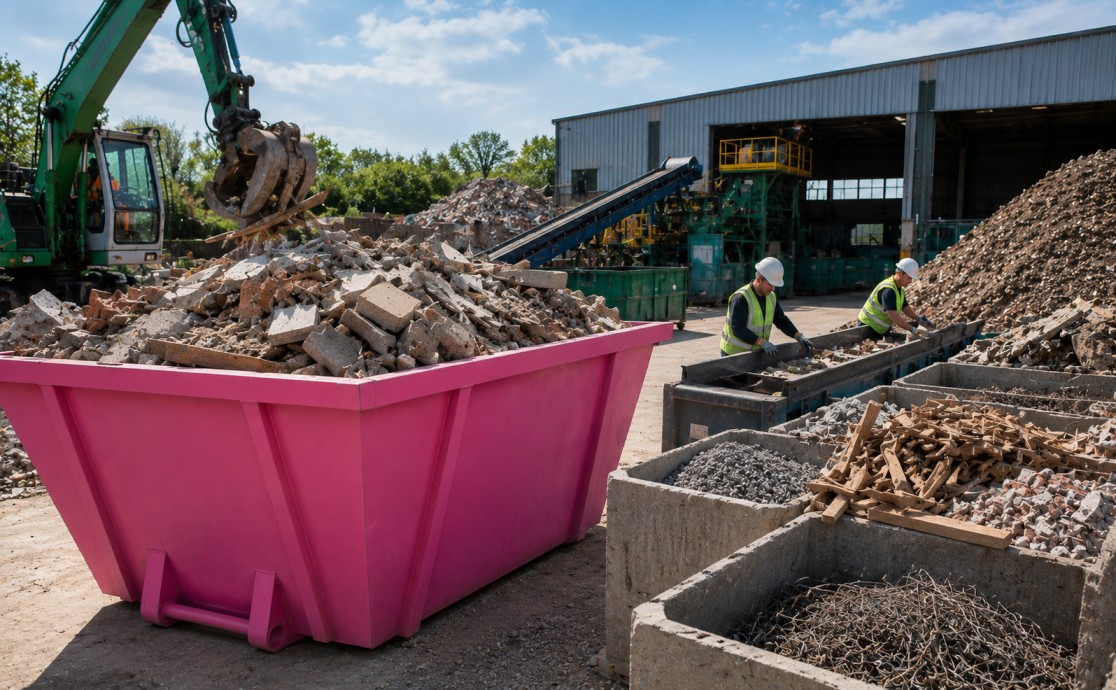
Every year, UK building sites produce millions of tonnes of rubble, timber, plaster and packaging. What happens to it once the skip is full often surprises people. Rather than heading straight to landfill, most construction waste collected by a reputable skip hire company is sorted, separated and sent on to be reused or recycled. With landfill tax now standing at £130.75 per tonne for standard waste, recycling has become both an environmental responsibility and a financial necessity for the whole industry. This article explains exactly how skip hire companies turn builders’ rubbish into reusable materials, what happens after your skip is collected, and why choosing the right provider makes a genuine difference to how much of your waste actually gets recycled.
Construction, demolition and excavation work generates one of the largest waste streams in the country. Bricks, concrete, wood, metal and plasterboard all take up space in landfill sites for years if they are not diverted.
Recycling this material reduces the strain on landfill capacity, cuts carbon emissions from producing new raw materials, and keeps disposal costs down for builders and homeowners alike. It also supports the UK’s broader waste hierarchy, which places reuse and recycling above disposal wherever possible.
For skip hire companies, recycling isn’t just good practice. It’s increasingly expected by customers, local councils and environmental regulators.
Once your skip is full, it’s collected and transported to a licensed waste transfer station or materials recovery facility. This is where the real work begins. Nothing is simply tipped and forgotten.
At the facility, mixed construction waste is separated into distinct material streams. This is done using a combination of methods:
Good sorting is the foundation of good recycling. The cleaner the separation, the more material can be recovered and reused rather than sent for disposal.
Once sorted, each waste type follows its own recycling path.
Bricks, concrete and rubble are crushed and screened to produce aggregate. This recycled aggregate is widely used in road building, foundations and landscaping projects, often at a fraction of the cost of virgin materials.
Timber is separated into clean and treated wood. Clean timber can be chipped and reused in products such as chipboard, while treated or painted wood is usually processed for biomass fuel.
Metals, including steel reinforcement bars, pipework and wiring, are highly valuable and almost always recycled. They are melted down and reformed into new metal products, a process that uses significantly less energy than mining and refining raw ore.
Plasterboard is recycled by grinding it down and separating the paper facing from the gypsum core. The recovered gypsum can be used to manufacture new plasterboard.
Packaging and plastics from building materials are baled and sent to specialist recycling plants, where they are processed into raw material for new plastic products.
Not every item placed in a skip can be recovered. Common exceptions include:
A responsible skip hire company will tell you upfront if something cannot go in a standard skip, and will explain the correct disposal route instead.
The best operators go beyond simply sending waste to a transfer station. They actively work to increase how much material is diverted from landfill.
Many companies now offer separate skips for specific materials, such as one for rubble and another for timber. Pre sorting on site speeds up processing and improves recycling rates, since the material arrives at the facility already partly separated.
Reputable skip hire firms only work with licensed waste carriers and Environment Agency registered facilities. This ensures your waste is handled legally and that recycling claims can be verified, rather than taken on trust.
For most commercial and construction projects, you’re entitled to a waste transfer note confirming where your waste went and how it was processed. This paperwork is useful for site records, environmental audits and demonstrating compliance with duty of care obligations.
Choosing a skip hire company with strong recycling credentials has practical advantages beyond the environmental case.
When comparing providers, it’s worth asking a few direct questions:
A company that answers these questions clearly and confidently is usually one that takes recycling seriously, rather than treating it as an afterthought.
Recycling construction waste is no longer optional in the UK, and it shouldn’t be treated as a box ticking exercise either. From crushed rubble becoming road aggregate to old plasterboard being turned into new boards, the process behind your skip collection has a real environmental and financial impact. Choosing the right skip hire company that sorts, processes and documents waste properly means your project contributes less to landfill and more to a genuinely circular building industry. If you’re planning a renovation, demolition or building project and want a skip hire service that takes recycling seriously, get in touch with a local, licensed provider to discuss the right skip size and waste plan for your job.
1. What percentage of construction waste actually gets recycled?
This varies by material and provider, but well managed sites regularly achieve recycling rates of 80 percent or higher, particularly for rubble, metal and timber. Ask your skip hire company for their specific figures.
2. Can I mix different types of waste in one skip?
You can, but mixing materials makes sorting harder and can reduce how much is ultimately recycled. Where possible, separating rubble, wood and general waste into different skips improves recycling outcomes.
3. Is there anything I should never put in a skip?
Yes. Hazardous items such as asbestos, gas canisters, batteries, paint tins and certain chemicals should never go in a standard skip. Speak to your provider about safe disposal for these items.
4. Do I need proof of how my waste was disposed of?
For commercial projects, a waste transfer note is standard practice and often required for compliance purposes. Homeowners can also request this documentation for peace of mind.
5. Does recycling construction waste cost more than sending it to landfill?
Generally, no. Because landfill tax adds a significant cost to non recycled waste, diverting material for recycling is often the cheaper option, as well as the more responsible one.