
28 Sep 2026 - 4:23 PM
Skip Hire for Office Clearances: What Businesses Need to Know

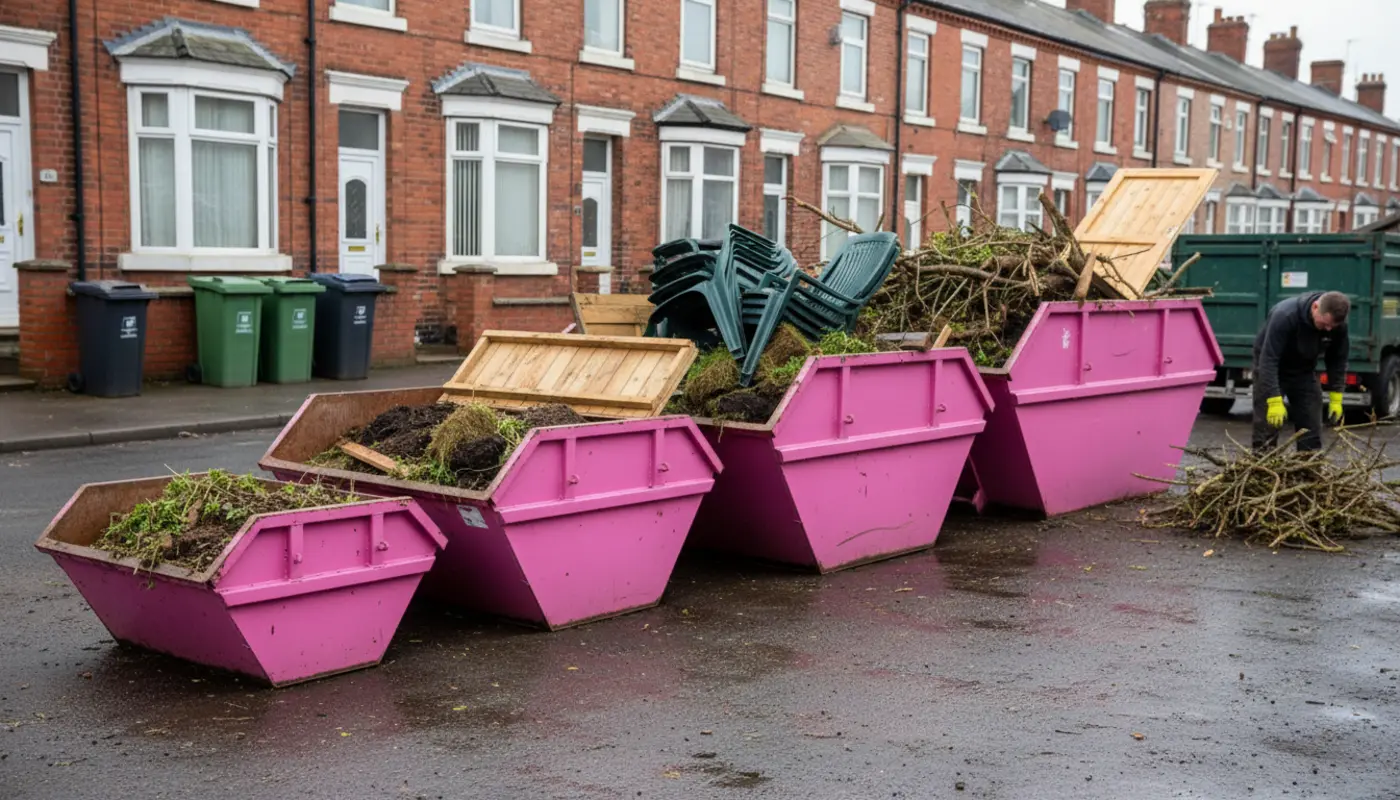
For a small garden tidy up, a 2 yard or 4 yard skip is usually enough. For a full garden clearance with branches, soil, fencing and old outdoor furniture, a 6 yard or 8 yard skip is often a better fit. If the job includes a lot of soil, turf, rubble or hardcore, weight matters more than space, so a smaller skip can be the safer choice.
Garden waste can be awkward because it does not all act the same way. Grass cuttings and hedge trimmings are light but bulky, while soil and turf can become very heavy before the skip looks full.
Pink Skip Manchester helps households, landlords and trades across Greater Manchester choose practical skip sizes for garden clearances, from quick weekend tidy ups to bigger landscaping jobs. With local experience, a good range of skip sizes and its own recycling facility, the service is built around making waste removal simple, on time and stress free.
Garden waste volume changes quickly depending on the type of job. A light tidy up after mowing the lawn, pruning shrubs and clearing leaves may only create 15 to 25 bin bags of waste. A neglected garden with overgrown hedges, old fence panels, broken planters, tree cuttings and garden furniture can easily fill 60 to 80 bin bags or more.
The tricky part is that garden waste rarely packs neatly. Branches leave empty gaps, hedge trimmings spring back up, and old fencing takes up more room unless it is broken down. Soil is different because it packs down well, but it becomes very heavy, especially after rain. That means two gardens can look similar in size but need different skips because the waste mix is not the same.
A good starting point is to think in bin bag amounts. A 2 yard mini skip usually holds around 20 to 30 bin bags, a 4 yard skip around 35 to 45, a 6 yard skip around 50 to 60, and an 8 yard skip around 70 to 80. If it helps, you can compare skip sizes using this guide to how many bin bags fit in a skip before booking.
Skip hire for garden clearances works best when you match the skip to both the amount of waste and the type of material. Light green waste is mainly a space issue, so the skip fills because the material takes up room. Heavy waste is a weight issue, so the skip may reach its safe load limit even when there is still space near the top.
For most home garden clearances in Manchester, the common choices are 2 yard, 4 yard, 6 yard and 8 yard skips. A 2 yard skip suits light pruning and small tidy ups. A 4 yard skip suits regular garden clearances and smaller fence jobs. A 6 yard skip is a strong choice for mixed garden waste. An 8 yard skip is better for bulky clearances where most of the waste is branches, timber, old outdoor furniture or general garden clutter.
If your garden job includes a lot of soil, turf or broken paving, do not assume a bigger skip is always better. Heavy materials can make larger skips unsafe to lift if they are filled too high. If you are not sure, that is normal because garden waste can be hard to judge. A smaller skip, or more than one collection, can be the better option for heavy loads.
A small garden tidy up usually includes grass cuttings, weeds, leaves, a few plant pots, hedge trimmings and light pruning. For a compact Manchester terrace garden or a small front and back garden, a 2 yard skip can often handle the job. It gives enough room for the waste without paying for space you do not need.
A 4 yard skip is worth considering if the garden has been left for a while, or if you are cutting back several shrubs and clearing borders at the same time. Hedge trimmings and branches do not settle like household rubbish, so a little extra room can save stress on the day. If you are choosing between a 2 yard and 4 yard skip, think about whether the waste would fit into around 25 bin bags. If it would go beyond that, the 4 yard skip is usually the more comfortable choice.
Small skips are also easier to place on tight driveways where access is limited. That can be helpful in parts of Manchester with narrow streets, terraced housing or parked cars near the property. If the skip needs to go on the road, you may need a council permit, so it is best to check before arranging delivery.
A medium garden clearance usually means more than just green waste. You might be removing a broken bench, old trellis, fence panels, bags of weeds, small tree branches, planters and perhaps a modest amount of turf. For this sort of project, a 4 yard or 6 yard skip is often the right fit.
The 4 yard skip is ideal when the waste is mostly light and there are only a few bulky items. For example, clearing a medium sized lawn edge, cutting back shrubs and taking down a couple of damaged fence panels would normally sit comfortably in this category. It is also handy when you want a skip that is not too big but still has enough space for awkward garden items.
A 6 yard skip becomes the better choice when timber, branches and mixed waste start to build up. If you are replacing several fence panels, clearing a shed corner, removing old garden furniture and dealing with green waste at the same time, the extra space helps. The 6 yard size is one of the most popular options because it balances capacity with sensible handling for mixed garden clearances.
A major garden clearance usually involves bigger, heavier or bulkier waste. It may include cutting back years of overgrowth, removing old decking, lifting turf, clearing soil, taking down fencing, breaking up planters and getting rid of outdoor junk left behind by previous tenants. For larger projects like this, a 6 yard or 8 yard skip is usually the most practical starting point.
An 8 yard skip is a good option when the waste is bulky but not too heavy. Branches, brash, fence panels, old plastic furniture and dismantled timber can take up lots of space, so the extra volume is useful. The more you break items down, the more value you get from the skip, especially with fencing and decking boards.
If a large part of the job is soil, clay, turf, slabs or hardcore, speak to the skip provider before choosing an 8 yard skip. Wet soil is far heavier than many people expect, and a skip full of soil can go beyond safe lifting limits. In many cases, a 6 yard skip or separate collections for heavy materials will be safer and more practical.
The easiest way to choose well is to look at the main waste type. Garden clearances often include a mix, but one material normally makes up most of the load. Once you know whether your waste is mainly light, bulky or heavy, the skip size decision becomes much clearer.
Some materials need extra care. Unsafe items, chemicals, paint, gas bottles and certain electrical items should not be placed in a standard skip. If you are clearing a shed and find old weedkiller, fuel, batteries or unknown containers, keep them separate and ask for advice before disposal. If you want a simple reminder before you start, this guide to what you can put in a skip explains the common rules.
Soil, turf and clay are the main reasons people accidentally choose the wrong skip size. A pile of soil may not look huge in the garden, but once loaded into a skip, it can weigh a lot. Rain makes the problem worse because wet soil, roots and turf hold moisture.
For mostly green waste, you normally run out of space before weight becomes an issue. For soil, you can hit the weight limit before the skip looks full. That is why many garden projects involving turf removal, raised bed soil or pond digging are better suited to smaller skips filled to an agreed safe level.
If you are mixing soil with branches and fencing, load carefully. Heavy material should sit low and evenly spread, while lighter bulky waste can sit above it without going past the fill line. Never heap waste above the skip sides, because unsafe loads cannot be transported legally.
Council garden waste collections are handy for normal seasonal gardening, especially when you only have grass cuttings, leaves and small plant waste. They are not always ideal for large clearances because bin space is limited, collection dates may not line up with your project, and some materials are not accepted.
Government advice explains the usual legal routes for garden waste, including council collections, home composting and household waste recycling centres. You can read the neutral GOV.UK garden waste disposal advice for general background on household options in England.
A skip becomes more practical when the job creates more than a few bags of waste, when you need to work over a weekend, or when you have a mixture of greenery, timber, soil and bulky items. It saves repeated car trips, reduces lifting in and out of vehicles, and gives you one clear place to put waste as the job moves along.
Manchester gardens can be tight for access, especially around terraces, shared driveways and streets with heavy parking. Before booking, check where the skip can safely sit and whether delivery lorries have enough room. A driveway is usually simpler, but a road placement may need a permit, depending on the location and local council rules.
If you are worried about access, permits or paying for a skip that is bigger than you need, you are not alone. These are some of the most common concerns people have before booking. Taking a few minutes to describe your garden waste, parking situation and preferred delivery spot can make the whole process much easier.
Timing also matters. Spring and autumn are busy garden clearance seasons because people are cutting back growth, preparing for summer or clearing leaves and storm damaged branches. Booking early gives you a better chance of getting the size you want on the day you need it.
Responsible disposal should be part of the decision too. Pink Skip Manchester uses proper waste handling processes and its own recycling facility to sort suitable materials wherever possible. That means your garden waste is dealt with in a safe, legal and environmentally sensible way.
Start by looking at the job, not the garden size alone. A small garden with decking, soil and fencing may need a larger skip than a bigger garden with only grass and leaves. Next, estimate how many bin bags the waste would fill if it were loosely packed. Do not squash branches into your estimate too much, because they always take up more space in real life.
Then decide how much of the waste is heavy. If more than half is soil, turf or rubble, lean towards a smaller skip and ask for loading guidance. If most of it is light greenery or bulky timber, choose based on space. When in doubt, describe the waste clearly when booking, including any soil, fence posts, shed panels, decking or furniture.
A quick phone chat can save money and hassle because experienced skip hire teams know how garden waste behaves once it is loaded. Pink Skip Manchester regularly helps local customers choose between mini, midi and builders skips, making sure the skip suits the garden clearance rather than just the rough size of the garden.
Can I Put Soil And Turf In A Skip?
Yes, soil and turf can usually go in a skip, but weight limits matter. A smaller skip is often safer for heavy garden waste than filling a large skip with soil.
What Skip Size Do I Need For Old Fence Panels?
A few fence panels may fit in a 4 yard skip if they are broken down. For several panels, posts and mixed garden waste, a 6 yard skip is usually more practical.
Can Grass Cuttings And Branches Go In The Same Skip?
Yes, grass cuttings, leaves, hedge trimmings and branches can usually go together. Cut branches down where possible so they do not waste space.
Is A Skip Better Than A Garden Waste Bin?
A garden waste bin is fine for regular maintenance, but a skip is better for larger clearances, bulky waste and jobs that create lots of material at once.
Can I Put Garden Furniture In A Garden Clearance Skip?
Most old garden furniture can go in a skip, provided it is not unsafe or restricted. Breaking furniture down helps you use the space more efficiently.