

15 Sep 2026 - 3:44 PM
The Best Skip Size for a Kitchen Renovation

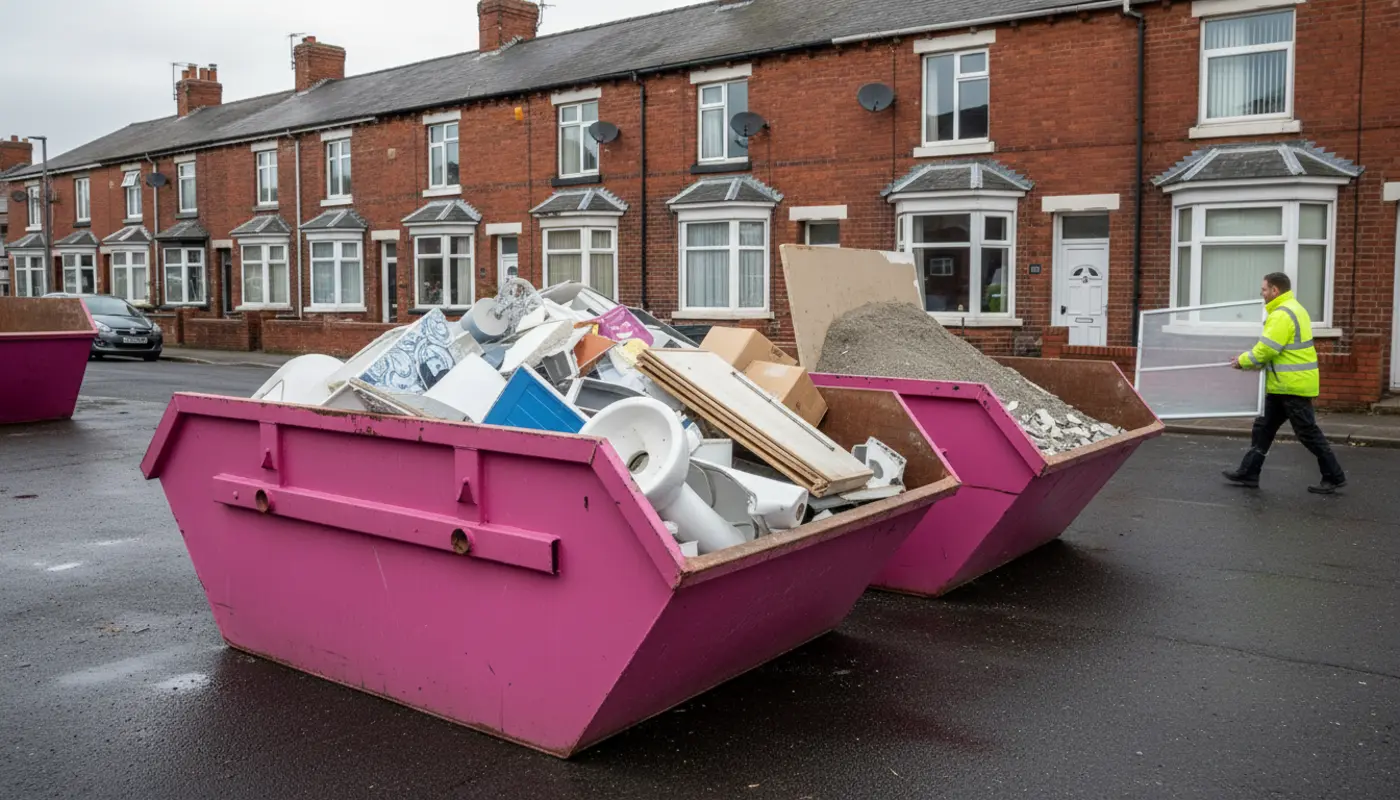
For most bathroom renovations, a 4 yard skip is the best skip size because it has enough room for tiles, sanitaryware, flooring, packaging and general refit waste without leaving you paying for space you do not need. If you are stripping out a larger bathroom, removing thick tile layers, taking down a stud wall, or renovating a bathroom and en suite together, a 6 yard skip is usually the safer choice.
Bathroom waste can be awkward because it is both bulky and heavy. A toilet, basin, bath, shower screen, floor tiles and wall tiles can fill a skip faster than many people expect, especially once broken tiles and rubble start to build up.
Pink Skip Manchester helps homeowners, landlords and trades across Greater Manchester choose the right skip size for bathroom refits. Local experience and an in house recycling facility help keep bathroom renovation waste moving smoothly and responsibly.
A 4 yard skip is usually best for a standard bathroom refit where you are removing old tiles, a toilet, basin, bath panel, flooring, packaging and light fixtures. It gives enough capacity for a typical single bathroom without jumping straight to a larger skip that may sit half empty on the driveway.
A 6 yard skip is better when the project is more than a simple refresh. Choose it if you are removing a bath, shower tray, vanity units, several layers of tiles, plasterboard, old flooring and a lot of rubble. It is also a sensible option when a tradesperson is doing a full strip out in one go and you want to avoid delays caused by running out of space halfway through the job.
Bathroom renovation waste is not just a few broken tiles and an old loo, although that is often where the mess begins. A typical bathroom strip out can include ceramic wall tiles, floor tiles, adhesive, grout, old sanitaryware, timber, plastic panels, shower screens, vinyl flooring, underlay, pipe offcuts, packaging and sometimes plasterboard.
Tiles are one of the main reasons bathroom waste becomes heavy. Even a small bathroom can produce a surprising amount of rubble once wall tiles are removed, especially if they were fitted over older tiles or thick adhesive. Ceramic sanitaryware, such as toilets and basins, also adds weight quickly, so the skip needs to suit both the amount of waste and the load.
Old baths can be awkward rather than especially heavy, depending on the material. Acrylic baths are usually lighter but bulky, while cast iron baths are very heavy and may need extra planning before removal. Shower trays, glass screens and vanity units also take up space unless they are safely broken down or stacked carefully.
The right bathroom renovation skip size depends on how much you are removing, how heavy the materials are, and how much space you have for skip placement. A small cloakroom refresh may only need a mini skip, while a full family bathroom strip out is far more likely to need a 4 yard or 6 yard skip.
If you are unsure, think about the job in layers. Are you only removing fixtures and a small amount of flooring, or are you taking the room back to bare walls? Are the tiles covering one splashback area, or are they floor to ceiling across every wall? Is plasterboard coming out too? These simple questions tell you far more than the room size alone.
For a wider view of skip sizing across home projects, the advice in how to choose the right skip size for your project can help you compare bathroom waste with other types of renovation waste.
A 4 yard skip is often called a midi skip, and it is a popular choice for bathroom refit skip hire because it balances space and cost well. It is suitable for most standard bathrooms where the waste includes tiles, a toilet, basin, small vanity unit, vinyl or laminate flooring, packaging and general mixed renovation waste.
A 6 yard skip gives extra room, which can be useful when there is more rubble or bulky waste than expected. It is often the better option for older bathrooms where tiles have been fixed over uneven surfaces, where plasterboard is being removed, or where the project includes a separate shower enclosure and bath.
The key is not to choose the biggest skip just in case. Larger skips cost more and may need more space for delivery, so it is better to match the skip to the waste you are likely to create. If the bathroom is average sized and you are not removing walls, a 4 yard skip is normally enough. If you are dealing with thick tiles, wet room materials, or more than one room, the 6 yard skip is the more practical choice.
A cloakroom refresh often creates less waste than people expect. If you are only removing a small sink, toilet, splashback tiles and flooring, a small skip may be enough. However, if there are heavy floor tiles or you are removing boxed pipework, it is worth checking before booking too small.
A standard family bathroom usually suits a 4 yard skip. This covers the common waste from taking out wall tiles, floor covering, a toilet, basin, bath panels, shower screen, old cabinets and packaging from the new suite. It also leaves some room for offcuts and broken materials without making you pay for unused space.
A full strip out with floor to ceiling tiles is where a 6 yard skip starts to make more sense. Tiles and adhesive take up less visible space than bulky furniture, but they are dense and can push weight limits quickly. If you are removing an old shower tray, bath, vanity unit, plasterboard and flooring at the same time, a 6 yard skip helps keep the work moving.
A bathroom conversion into a wet room can also create more waste than a simple refit. You may have old flooring, boards, tiles, plasterboard, timber framing, shower screens and waterproofing materials to remove. In that case, speak to the skip hire team before booking because the waste mix can change the best size.
Most bathroom renovation waste can go into a mixed waste skip, as long as it is not hazardous and does not need separate handling. The safest approach is to check before the skip arrives, especially if your bathroom contains older materials, large amounts of plasterboard, or electrical items.
Plasterboard needs extra care because it contains gypsum, which is treated differently from general mixed waste. Many waste operators require plasterboard to be kept separate, and the Environment Agency provides useful background in its guidance on storing waste plasterboard. If you expect to remove plasterboard from a bathroom ceiling, wall lining, or stud partition, mention it when booking so the right advice can be given.
Bathroom skips are not suitable for every item that comes out of a renovation. Paint tins with liquid paint, chemicals, asbestos, fluorescent tubes, electrical appliances and some sealed containers normally need separate disposal. If your bathroom is older and you suspect asbestos in floor tiles, insulation board, or textured coatings, stop work and get professional advice before removing anything.
Electric showers, extractor fans, heated towel rail controls and light fittings may fall under electrical waste rules. These items should not simply be buried under tiles and rubble. A good skip hire company will explain what can go in the skip and what needs separating, which helps avoid extra charges or waste being refused after collection.
For a simple breakdown of everyday accepted and restricted items, what you can put in a skip is a useful read before your bathroom work begins.
The easiest way to avoid overpaying is to be honest about the scale of the strip out. If you are keeping the bath, not removing wall tiles and only changing a vanity unit, you probably do not need the same skip as someone taking a bathroom back to brick. A quick list of what is coming out can make the choice much clearer.
Stacking also makes a difference. Flat items such as bath panels, timber, laminate and cardboard should be placed neatly where possible. Bulky items like basins and toilets should be positioned carefully so they do not create big empty gaps. You should never climb into a skip to squash waste down, but careful loading from ground level can help you use the space well.
Do not overfill the skip to squeeze in the last few bits. Waste must stay level with the sides for safe transport, and an overloaded skip may not be collected until the excess is removed. That can delay the bathroom fitter, annoy the neighbours and turn a tidy saving into an avoidable headache.
In Greater Manchester, access and timing can be just as important as skip size. Many terraced streets and busy residential roads have limited space, so a driveway is usually the easiest place for a skip if you have one. If the skip needs to sit on a public road, a permit may be required, so it is best to arrange this before the renovation starts.
Timing your delivery well also saves hassle. For most bathroom refits, the skip should arrive on or just before the strip out day, not a week early. That gives your tradesperson somewhere to put waste straight away and reduces the chance of other people adding unwanted rubbish when nobody is looking.
Pink Skip Manchester works across Greater Manchester and understands local access issues, busy streets and the practical realities of home renovation waste. With a range of skip sizes and an experienced team, it is easier to book the right skip first time rather than guessing and hoping for the best.
Choose a 4 yard skip for a normal single bathroom renovation where you are removing standard tiles, flooring, sanitaryware and general refit waste. It is the best balance for many homes because it offers practical space without making you pay for a larger skip that you may not fill.
Choose a 6 yard skip if the bathroom is large, fully tiled, being stripped back heavily, or includes plasterboard, wet room materials, a shower enclosure and bulky units. If you are renovating a bathroom and en suite together, or you are unsure how many tile layers are coming off, the extra capacity can save time and stress.
If the job sits between two sizes, speak to the skip hire team and describe the waste rather than only giving room measurements. A few details about tiles, sanitaryware, flooring and plasterboard are usually enough to point you towards the most cost effective option.
If you would like a quick steer before booking, tell the team what is coming out of the bathroom and where the skip will be placed. Getting that sorted early can remove one common worry before the messy bit begins.
Is A 4 Yard Skip Enough For A Bathroom Renovation?
Yes, a 4 yard skip is enough for many standard bathroom renovations, especially where you are removing tiles, flooring, a toilet, basin and general refit waste. Choose a 6 yard skip if the bathroom is fully tiled or being stripped back more heavily.
Can I Put Old Bathroom Tiles In A Skip?
Yes, old bathroom tiles can usually go in a skip, along with grout and adhesive from normal removal work. Because tiles are heavy, it is best to avoid choosing a skip that is too large for dense rubble without checking weight limits.
Can I Put Plasterboard In A Mixed Skip?
Plasterboard often needs to be kept separate because it contains gypsum. Gypsum is a mineral used in plasterboard, and it needs careful disposal at waste sites. Always mention plasterboard when booking so you can be advised on the correct disposal method.
What Happens If I Underestimate The Skip Size?
If the skip fills up too soon, you may need an exchange or a second skip, which can cost more than choosing the right size at the start. A quick waste list before booking usually helps avoid this.
Should I Choose A Builders Skip For A Bathroom Refit?
A builders skip is often bigger than needed for a single bathroom refit. It may be suitable for larger projects, but most standard bathrooms are better matched to a 4 yard or 6 yard skip.