
27 Aug 2026 - 3:43 PM
Skip Hire vs Man & Van: Which Waste Removal Option Is Best?
Hiring a skip is one of the easiest ways to clear a renovation, house move, or garden overhaul, but not everything is allowed in. Certain items, including asbestos, gas cylinders, batteries, tyres, electricals, and upholstered furniture containing POPs, are banned from general skips by UK law. Getting this wrong can mean a refused collection, a contamination charge, or in serious cases a fine. This guide breaks down exactly what can’t go in a skip, why the rules exist, and where to take these items instead, so your clear out goes smoothly from start to finish.
Skip hire companies are licensed waste carriers, and that licence comes with legal responsibilities. Certain waste types are classed as hazardous, controlled, or subject to special recycling rules under UK environmental law. If a banned item ends up mixed in with general waste, it can contaminate the whole load. That means the entire skip, not just the offending item, may be rejected at the transfer station or charged at a higher rate.
Knowing the rules before you load up saves time, money, and hassle later.
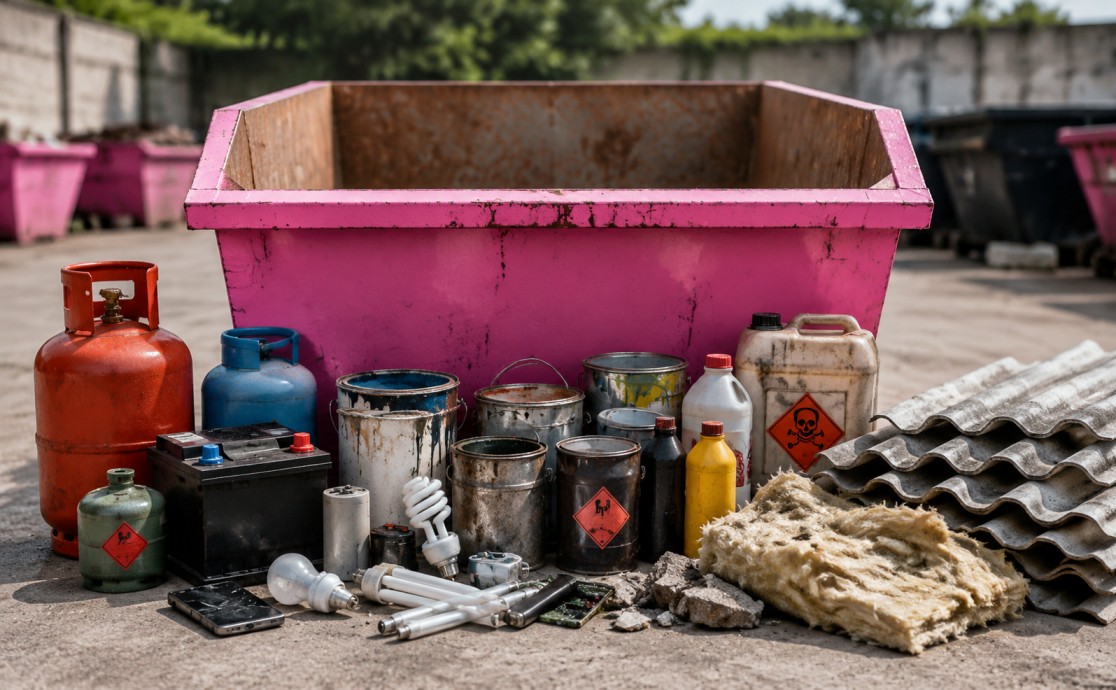
Asbestos is one of the most dangerous materials found in older properties, particularly in roofing, insulation, and floor tiles. It must never go in a standard skip. Disturbing it releases fibres that cause serious lung disease. If you suspect a property contains asbestos, arrange a survey and use a licensed asbestos removal specialist or a dedicated asbestos skip.
This is one of the most misunderstood restrictions, and one many households only discover once their skip has already been refused. Since 2023, the Environment Agency has enforced rules on Persistent Organic Pollutants, known as POPs, found in flame retardants used in older upholstered seating. Sofas, armchairs, futons, dining chairs, beanbags, and cushions are now assumed to contain POPs unless proven otherwise, and this waste must be incinerated rather than landfilled or recycled through a normal skip.
Always tell your skip company in advance if upholstered furniture is part of your clear out, as many can arrange separate collection for a small additional fee.
Anything with a plug, battery, or cable falls under Waste Electrical and Electronic Equipment regulations. This covers televisions, fridges, freezers, washing machines, computers, and small kitchen appliances. These items contain recoverable metals alongside substances like mercury and lead, so they must be processed at a dedicated WEEE facility.
Car, van, and other vehicle tyres are banned from landfill and cannot go in a skip. Most tyre garages will dispose of old tyres responsibly for a small fee, and some skip companies offer separate tyre collection if you ask when booking.
Gas cylinders, including those used for camping, catering, or DIY, must never go in a skip, even if they appear empty. Residual pressurised gas creates a genuine explosion risk when compacted at a waste facility. Return cylinders to the supplier or take them to a specialist recycling point.
From household AA batteries to car and leisure batteries, all battery types are banned. They contain corrosive and toxic materials that can leak. Most supermarkets have battery recycling points, and car batteries can usually be returned to a garage or recycling centre.
Skips are for solid waste only. Liquid paint, engine oil, cooking oil, solvents, pesticides, and cleaning chemicals are all prohibited because they can leak, contaminate soil, and damage machinery at processing sites. Fully dried paint tins are usually fine, but wet paint is not. Take liquid waste to a household waste recycling centre, which will accept most household chemicals free of charge.
Needles, sharps, bandages, and other clinical waste must never be placed in a skip under any circumstances. This waste needs a licensed healthcare waste provider or your local council’s clinical waste collection service.
Food waste should go in your council’s food caddy or a compost bin rather than a skip, as it attracts pests and complicates processing. Similarly, garden chemicals such as weed killer or pesticide concentrate belong with household hazardous waste, not general skip waste.
Flares, fireworks, ammunition, and any explosive material are strictly banned from skips. These require police or specialist disposal and should never be handled as general waste.
Skip operators are required to inspect loads before disposal, and undeclared prohibited items are usually spotted. Consequences can include the following.
The safest approach is always to ask your skip provider before loading anything you are unsure about. A quick phone call is far cheaper than a rejected collection.
Knowing what can’t go in a skip is just as important as knowing what can. The rules exist to protect people, the environment, and the waste teams handling your rubbish, and following them keeps your project moving without unexpected costs or delays. If you are ever unsure whether something is allowed, the safest option is always to ask before you load it in.
If you are planning a clear out, renovation, or house move in Manchester, get in touch with Pink Skips Manchester. Our team can talk you through exactly what your skip can take, arrange separate collection for items like electricals or upholstered furniture, and help you choose the right size for your project. Book your skip online today or give us a call for friendly, expert advice.
Can I put a sofa in a skip?
Not usually. Since 2023, most upholstered furniture, including sofas, armchairs, and padded dining chairs, is treated as containing Persistent Organic Pollutants and must be disposed of separately by incineration.
Can I put paint tins in a skip?
Only if the paint is completely dry or the tins are empty. Wet or liquid paint is classed as hazardous waste and cannot go in a skip. Take unused liquid paint to a household waste recycling centre.
Is it illegal to put electrical items in a skip?
Yes, electrical and electronic items are governed by WEEE regulations and must be recycled separately from general waste. Skip companies are not permitted to accept them mixed in with other rubbish.
What happens if a banned item is found in my skip?
The item may be removed and charged separately, or the entire skip could be classed as contaminated and re-charged at a higher rate. In cases involving hazardous waste like asbestos, you could also face a fine.
Can I put a fridge or freezer in a skip?
No. Fridges and freezers contain refrigerant gases and are classed as WEEE waste, requiring specialist processing. Most councils offer free collection or drop off points for large appliances.