

21 Oct 2026 - 3:27 PM
What Is a Builders Skip? Sizes and Best Uses

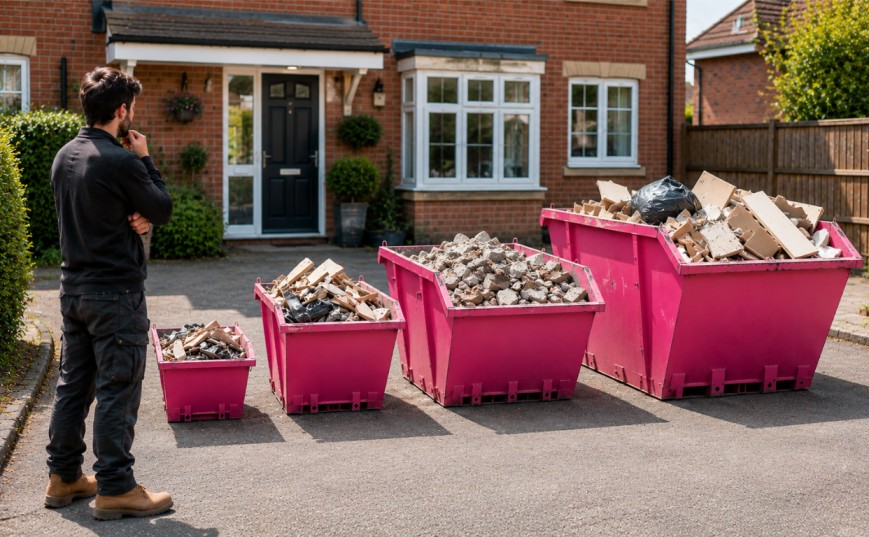
Choosing the right skip size is one of those things that seems straightforward until you are actually standing in front of a pile of rubbish, wondering whether you have over- or underestimated. Get it wrong, and you either pay for space you do not use, or you fill up the skip on day one and have nowhere left to put your waste. This guide walks you through everything you need to know, with practical advice drawn from real jobs, so you can hire with confidence and avoid nasty surprises.
Hiring a skip that is too small could mean you need a second one, which costs more in the long run. Hiring one that is too large means you are paying for capacity you simply do not need.
Beyond cost, there is also a practical side to consider. A larger skip takes up more space on your driveway or road, and if you need a permit for a skip on a public highway, the size of the skip can affect the cost and logistics of that, too.
Getting the size right from the start saves you money, time, and hassle.
Skip sizes are measured in cubic yards. Here is what each size generally looks like and what it is best suited for.
This is the smallest option available and is ideal for small domestic clearances.
Best for:
Think of a mini skip as roughly the equivalent of three to four standard builders’ bags. It fits neatly on most driveways and is a popular choice for quick residential jobs.
Sitting in the middle ground, a midi skip works well for slightly larger projects without taking over your driveway.
Best for:
This is the most commonly hired skip size in the UK and for good reason. It handles the bulk of domestic and light commercial waste with ease.
Best for:
If you are unsure which size to go for, a builder’s skip is usually a safe bet for most mid-sized jobs.
These are for more substantial projects where significant volumes of waste are being generated over a period of days or weeks.
Best for:
These are the giants of the skip world and are primarily used on large construction sites or industrial projects. They are delivered by specialist vehicles and require significant space to position correctly.
You do not need to be precise, but a rough estimate goes a long way. Here are a few practical methods.
Walk through the job and count items. Think about furniture, bags, timber, soil, or rubble. Large items like sofas, wardrobes, and mattresses take up a surprising amount of space.
Think about fill rate. A skip filled with light garden waste or cardboard boxes will accommodate far more than one filled with broken bricks or soil, which are much heavier and denser.
Consider the duration. If you are carrying out a renovation over several days, waste accumulates quickly. It is often better to size up slightly than to run out of room halfway through a project.
A useful rule of thumb: one cubic yard of skip space holds roughly the equivalent of 10 to 12 black bin bags. So a 6 yard skip can hold around 60 to 70 bags worth of rubbish.
The nature of your waste matters just as much as the volume. Heavy materials like soil, concrete, and rubble fill a skip quickly and can also hit weight limits fast. If you are disposing of mostly heavy materials, a smaller skip that is not overfilled is often a better and safer choice.
You need enough room to position the skip safely, whether that is on your driveway or on the road outside. Smaller skips are easier to position in tight spots, while larger ones need more room to be dropped off and collected safely.
If your skip needs to sit on a public road rather than private land, you will need a skip permit from your local council. The permit requirements are the same regardless of skip size, but it is worth factoring in the timing, as permits can take a couple of days to come through.
Most skips accept a wide range of general waste, but there are items that cannot go in regardless of size. These include:
If your clearance involves any of these, let us know and we can advise on the best way to dispose of them responsibly.
| Project | Recommended Skip Size |
|---|---|
| Garden tidy up | 2 to 3 yard mini skip |
| Bathroom or kitchen refit | 4 to 6 yard midi or builder’s skip |
| Full house clearance | 8 yard builder’s skip |
| Loft or garage clearance | 6 to 8 yard builder’s skip |
| Large extension or renovation | 10 to 12 yard large skip |
| Commercial or site clearance | 12 yard or roll-on roll-off |
Choosing the right skip size does not need to be complicated. Think about the nature of your waste, the scale of your project, and the space you have available, and you will be most of the way there. When in doubt, sizing up slightly is usually the wiser move.
At Pink Skips Manchester, we have helped homeowners, contractors, and businesses across Greater Manchester find the right skip for the job. Whether you are clearing out a garage or managing a full renovation, we are here to make waste removal as straightforward as possible.
Ready to book? Get in touch with the Pink Skips Manchester team today for a fast, friendly quote and we will have the right skip delivered to your door at a time that suits you.
What happens if I fill the skip beyond the top?
Skips must not be filled above the rim. Overfilled skips cannot be legally transported on public roads, so if yours is overloaded when the driver arrives, they may be unable to collect it until the excess has been removed. Always aim to keep waste at or below the top edge.
Can I put soil or rubble in any size skip?
You can put soil and rubble in most skips, but because these materials are so heavy, they are best suited to smaller skips used exclusively for that purpose.
How long can I keep the skip?
Standard hire periods are typically seven to fourteen days, depending on your requirements. If you need the skip for longer, just let us know when booking and we can arrange an extended hire period.
Do I need a permit if the skip goes on my driveway?
No permit is needed for a skip placed entirely on private land such as your own driveway. A permit is only required when the skip is positioned on a public road or pavement.
What if I am not sure which size to choose?
That is exactly what we are here for. Our team can talk through your project with you and recommend the most suitable skip size based on your specific job.